Costa Rica 2020
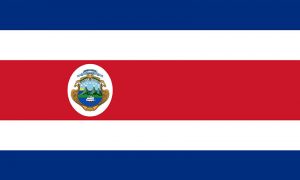
Costa Rica at a glance: Population:4.8 million (largely of Spanish extraction, though Costa Ricans of African origin on the Caribbean coast, as well as 64,000 indigenous people). It is a young country: around a quarter are aged under 15. Main exports: coffee and bananas, though income through tourism has overtaken these products. Currency: colón (as in Cristobal Colón aka Christopher Columbus), who landed in Costa Rica on his last voyage in the region). The flag is inspired by the French flag: red, white and blue. Costa Rica abolished its army in 1948.
Costa Rica’s wildlife: the country is home to around 250 species of mammals, over 400 varieties of reptile and amphibian, nearly 900 species of bird, 250,000 types of insect, including a quarter of the world’s known butterflies. (from the Rough Guide to Costa Rica).
Thursday 5 March
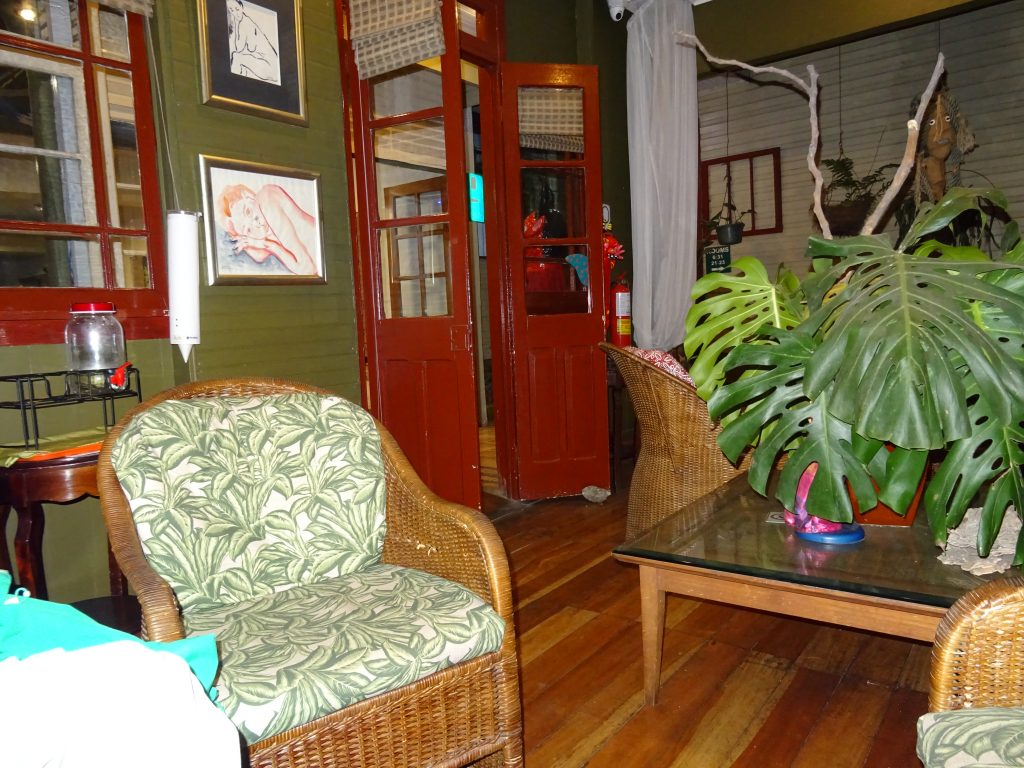
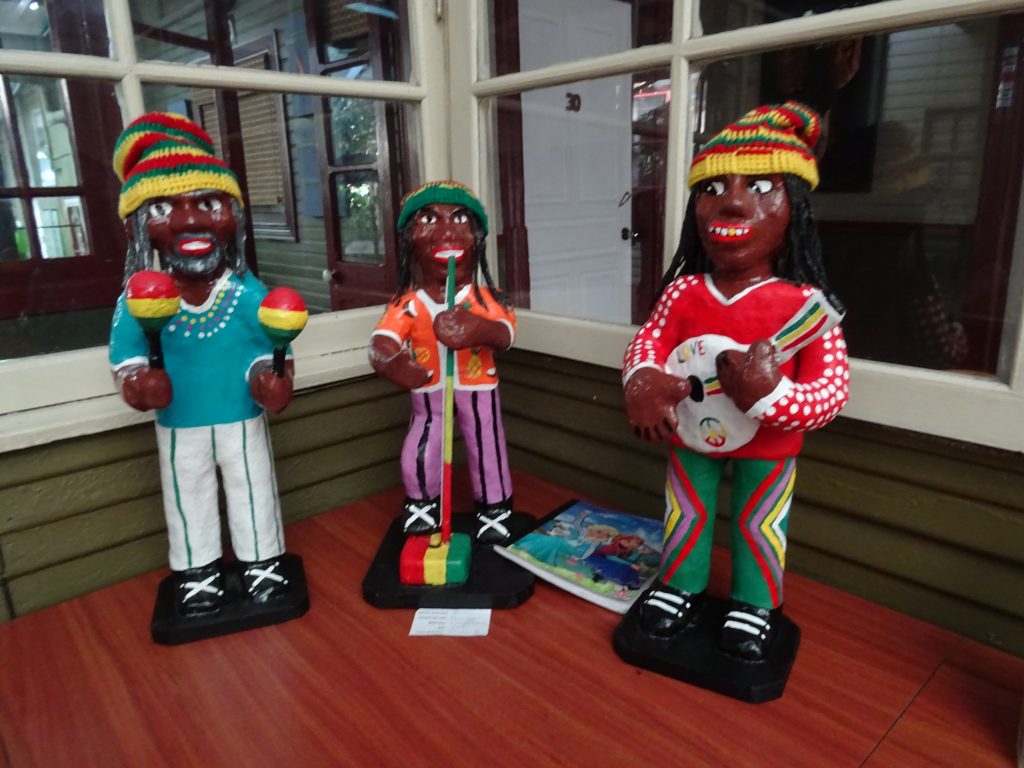
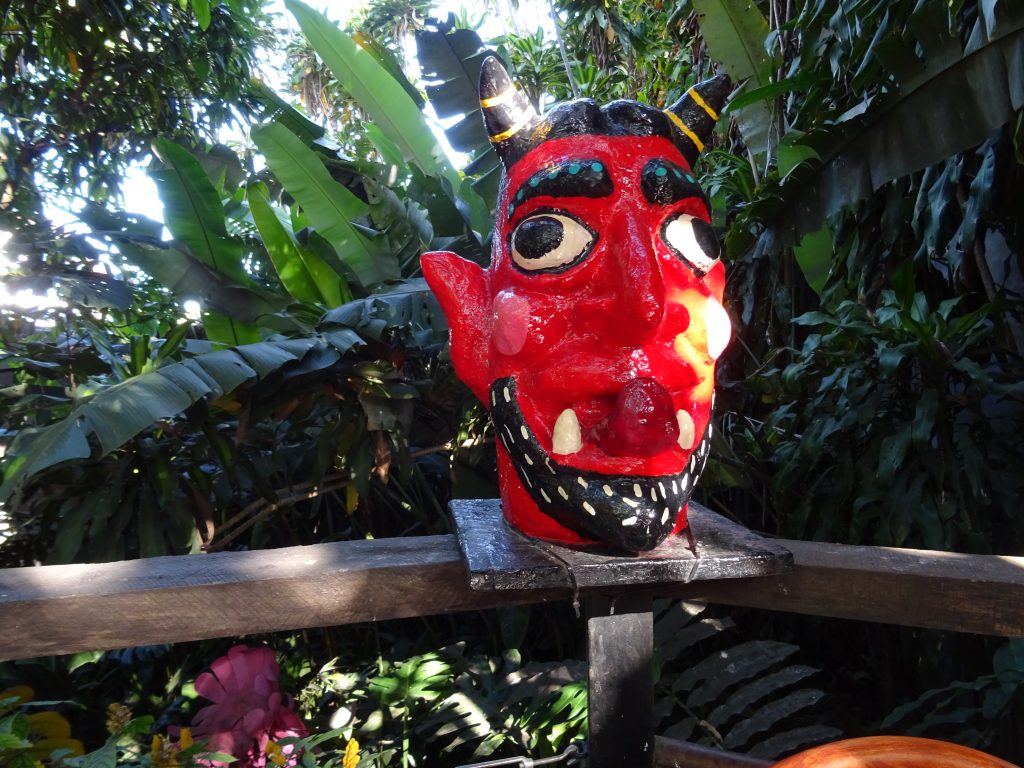
Ready to leave this dreary, wet and bleak weather for a sunnier climate! We arrived at San José Juan Santamaria airport after a 10 1/2 hour flight (and two very nice vegan meals, with wine and tea). The transfer to our hotel took one hour as there was an accident, as our driver explained. I had a nice surprise: I got a present for my birthday, a nice canvas bag, a little wooden box with a painted butterfly and a fridge magnet (courtesy of Ecole travel agency). The Aranjuez Hotel is very nice, colonial style, 1930s, separate houses, a bit of a labyrinth. A beautiful garden. Very colourful ‘creatures’ dotted around the hall and corridors.
Friday 6 March
San José, the capital of Costa Rica
Breakfast at 7am, very good: lots of fresh fruit (pineapple, guava, watermelon), toast and very interesting jams like passion fruit (maracuyá to locals). At 9am we were picked up and taken to the office of Ecole, the local travel agency. We met Mareike, who is Dutch and has lived in Costa Rica for 15 years, married a Costarican and has two children. That was the ‘meet and greet’ session, where she explained all the itinerary and the trips organised for us and other options of walks, treks and visits.
Then we had our city tour with Rocío, a very nice woman, who took us to the main central area of San José, including the Avenida Central, Parque Central, the Cathedral and the Teatro Nacional.
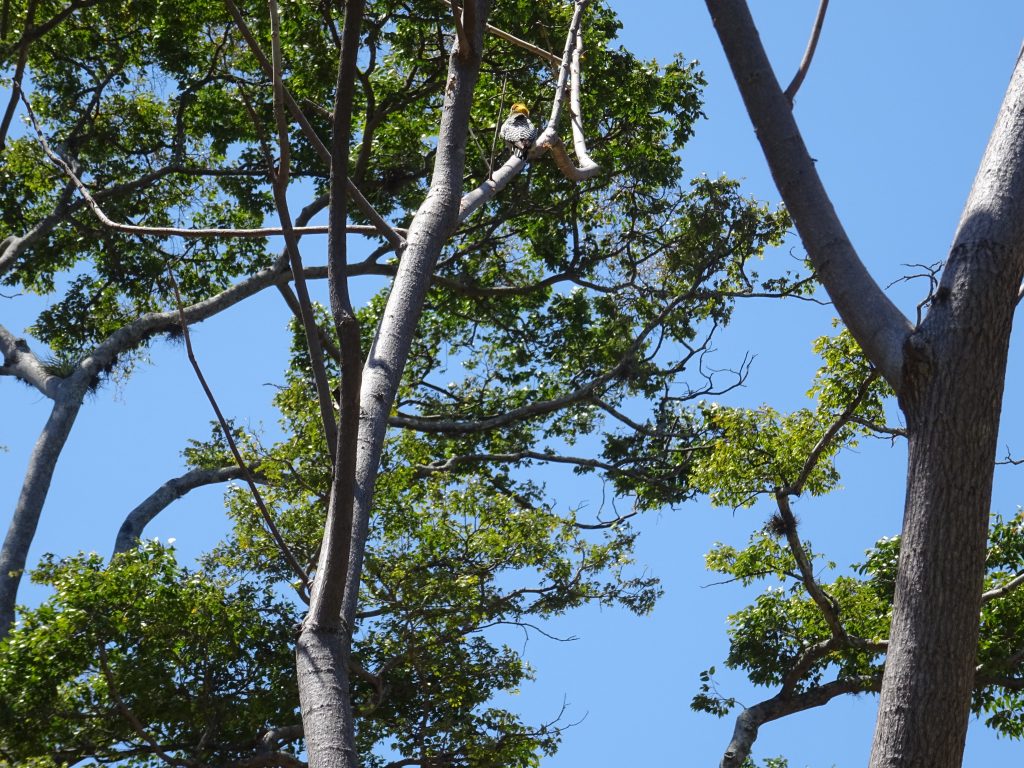
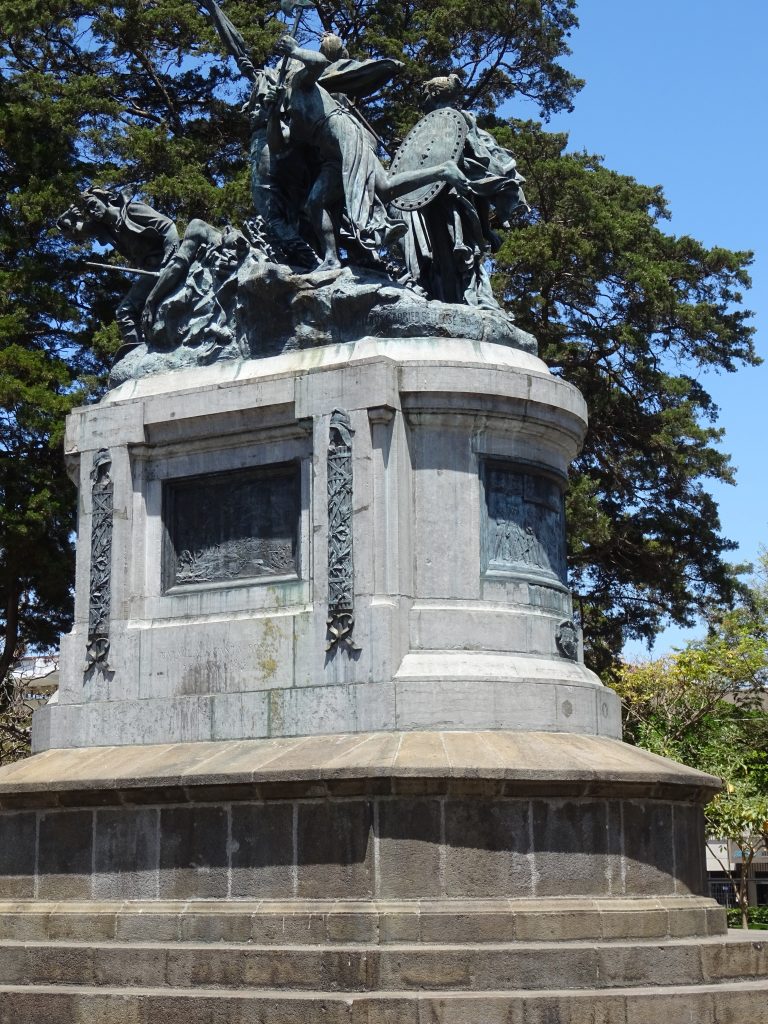
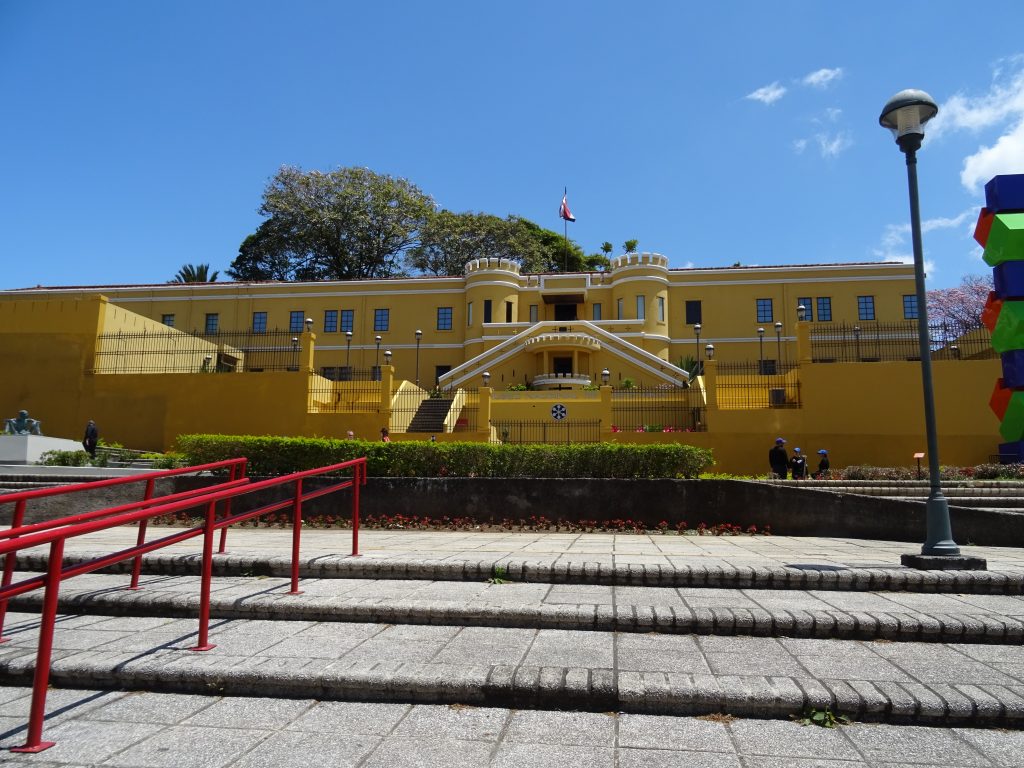
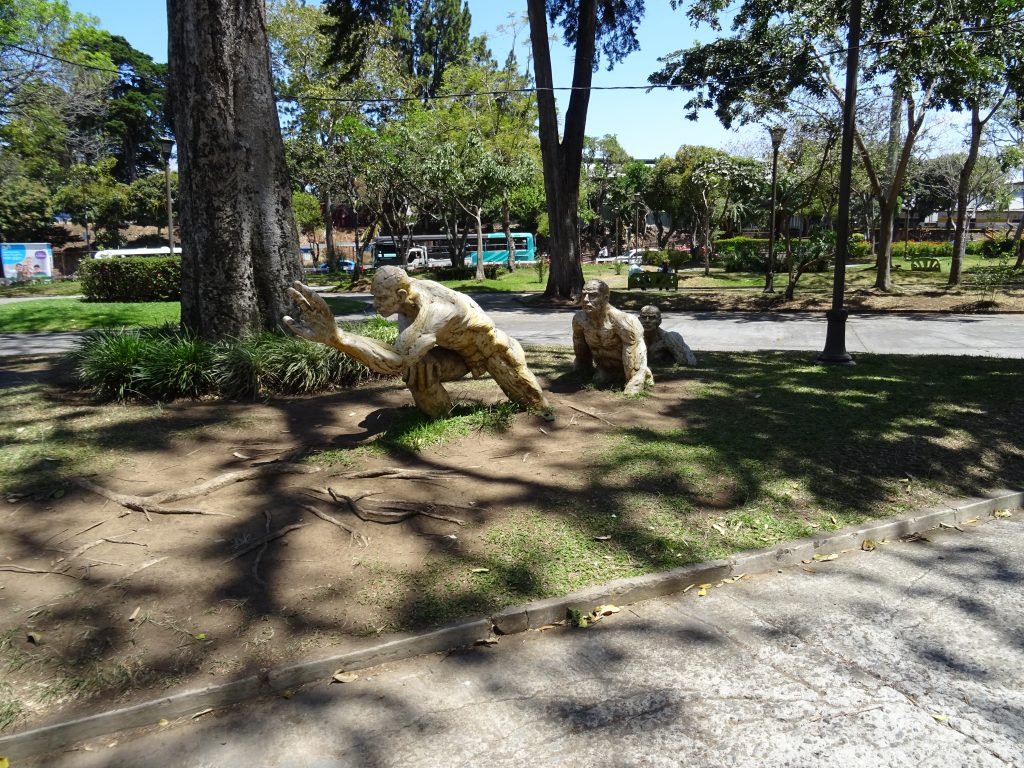
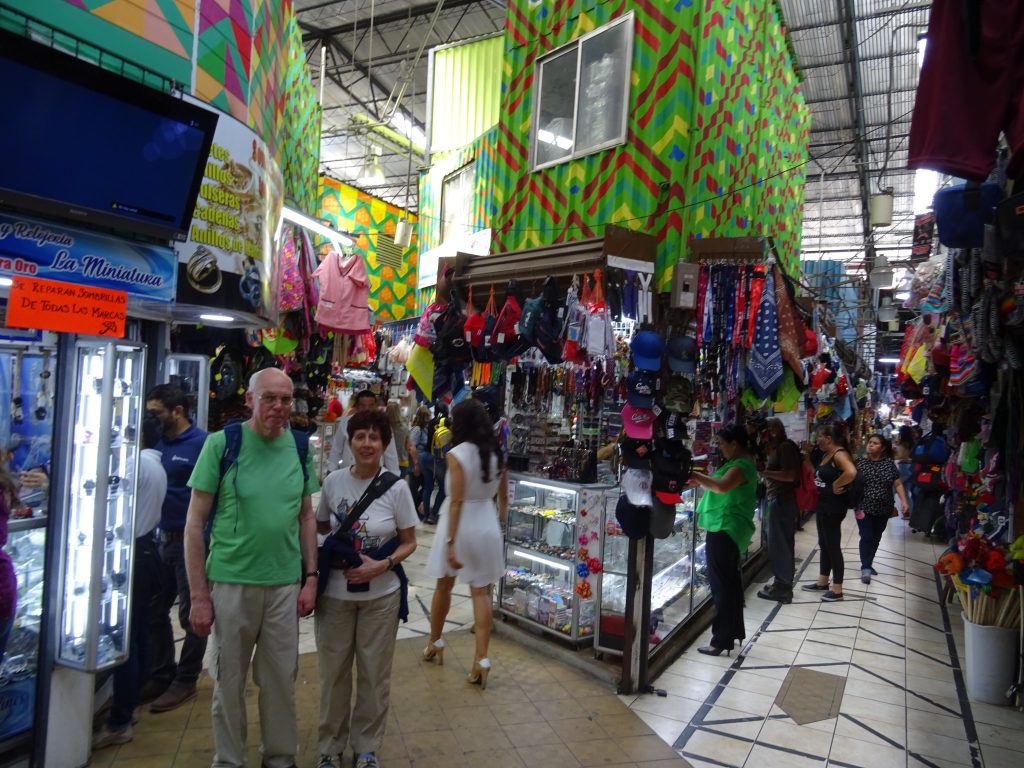
We had lunch in the Mercado Central, and had our first taste of casado, the typical Costa Rican dish: rice, beans, vegetables, salad and avocado.

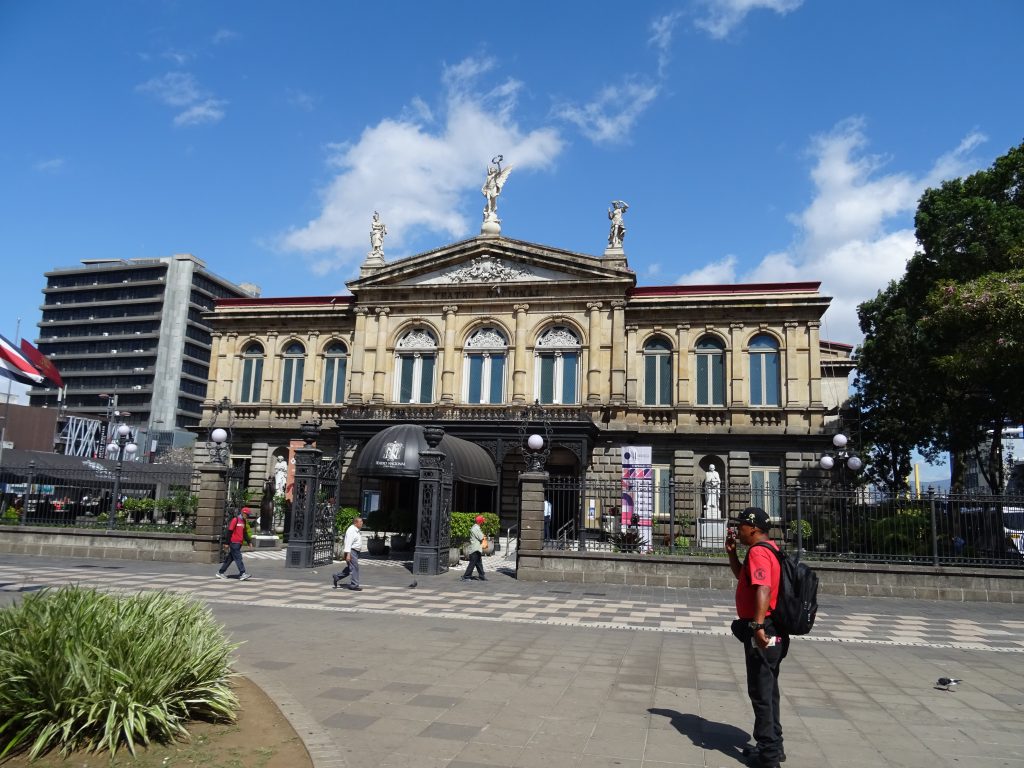
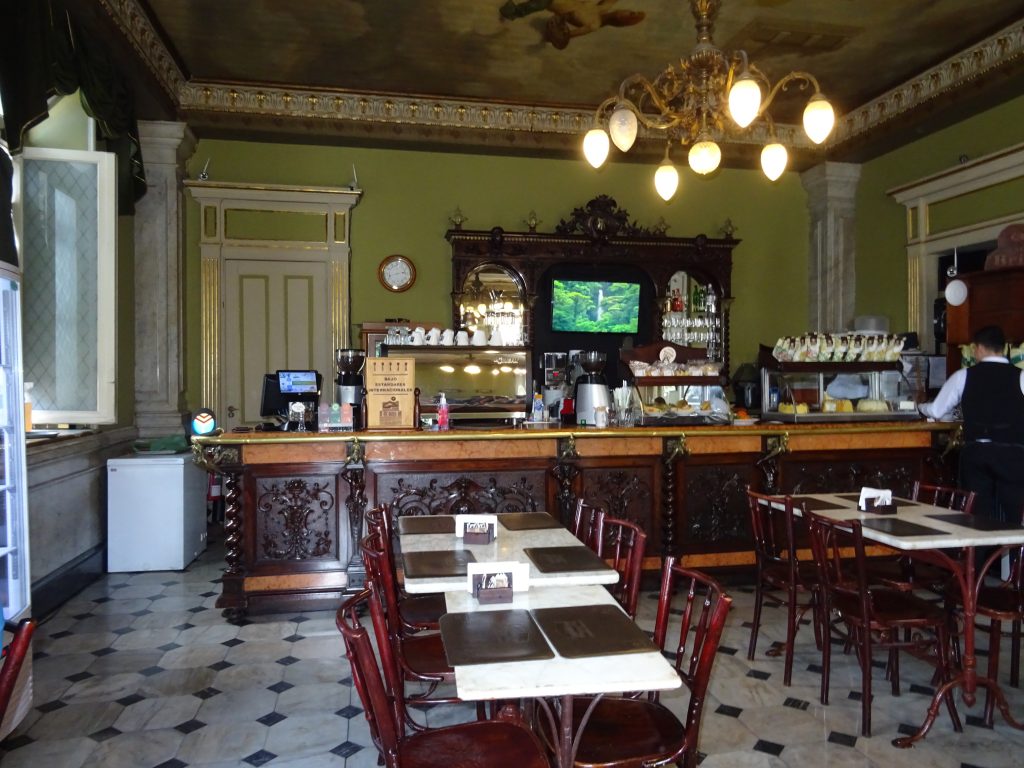
We stopped for coffee in the cafe at the Teatro Nacional (above) and then we walked back to our hotel with Rocío, who had a satnav on her phone. I don’t think we would have been able to find our way on our own!
Saturday 7 March
Puerto Viejo
We left San José at 8am for a drive towards Puerto Viejo where we arrived at 2pm! Very long journey, heavy traffic with lots of lorries, but with two comfort breaks. We met a couple on the shuttle bus: he from Spain (Murcia) and she from Switzerland (Zürich) – small world!
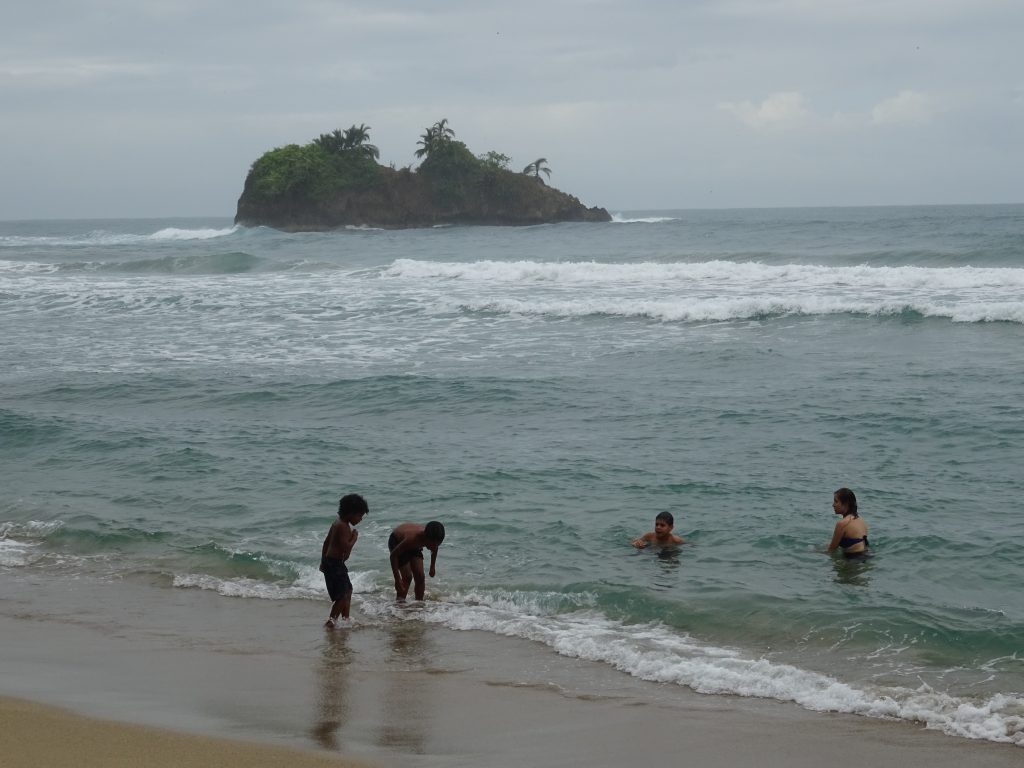
We are staying at the Cariblu Resort Hotel, off the main road and in a lush, green setting just outside the village. There was even a jacuzzi pool, but we never managed to use it; they switched it on the morning we were leaving! After settling into our comfortable room (with a ceiling fan and a/c) we walked about 3km into Puerto Viejo, looked at the sea with its enormous waves and riptides – too dangerous to swim, but good for surfing. We found a place to eat – a soda – rice and beans with vegetables and a salad with a nice passion fruit dressing (which the owner’s father makes), plus chips. Sodas are like a diner/workers’ café, unpretentious and cheap.
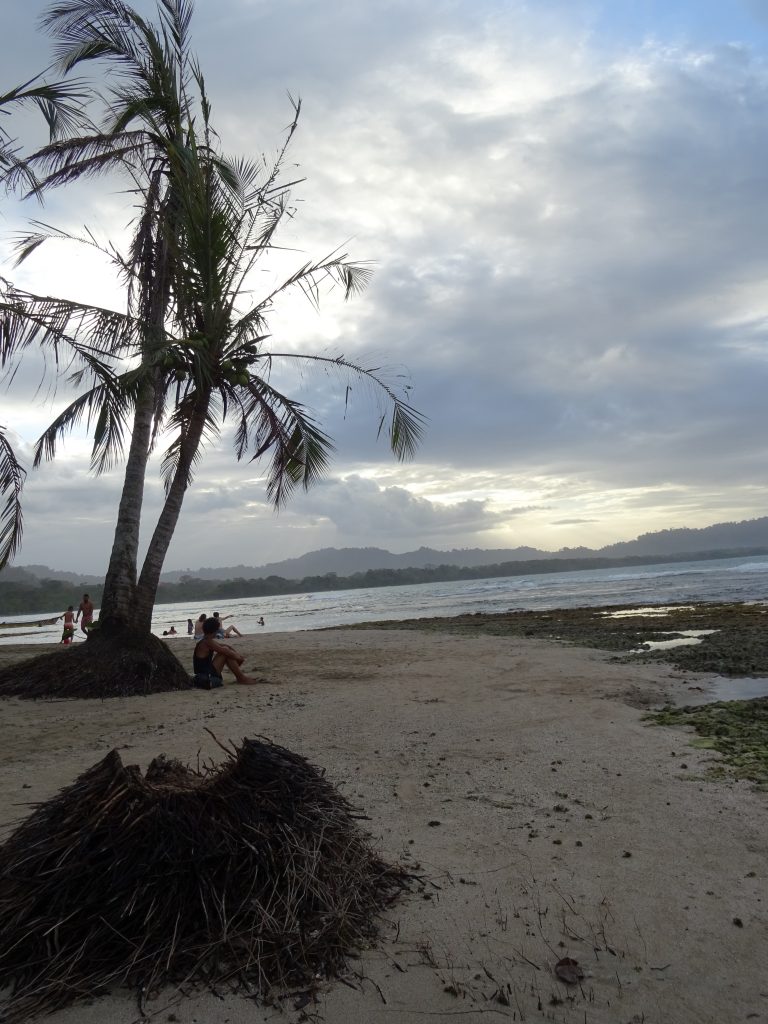
Sunday 8 March – International Women’s Day
Puerto Viejo, Cahuita National Park
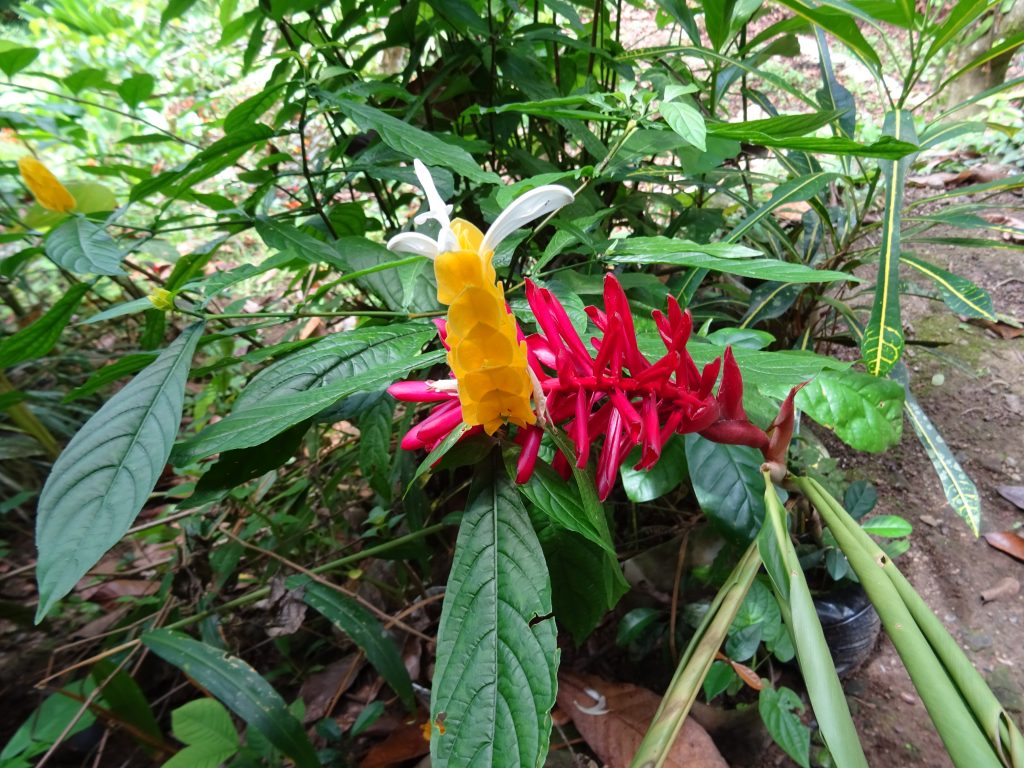
Early breakfast at 7.30am and waiting for Jacky (of Jacky’s Tours) at 8am. At nearly 9am, after a couple of phone calls from a reluctant receptionist, Jacky turned up (we are in Latin America, let’s not forget…). It turns out that there was an accident on the road – a woman runner was injured by a car during a triathlon. Anyway, we drove to Cahuita National Park which is along the sea and occupies 10 square km. Jacky is very knowledgeable about plants and animals and especially indigenous natural medicines and remedies. She is Bribri (mother Bribri and father African Caribbean). We saw monkeys, bats, a yellow snake curled up on a tree branch, a colibri (hummingbird), a racoon and a few sloths (perezosos). Short walk but nice.
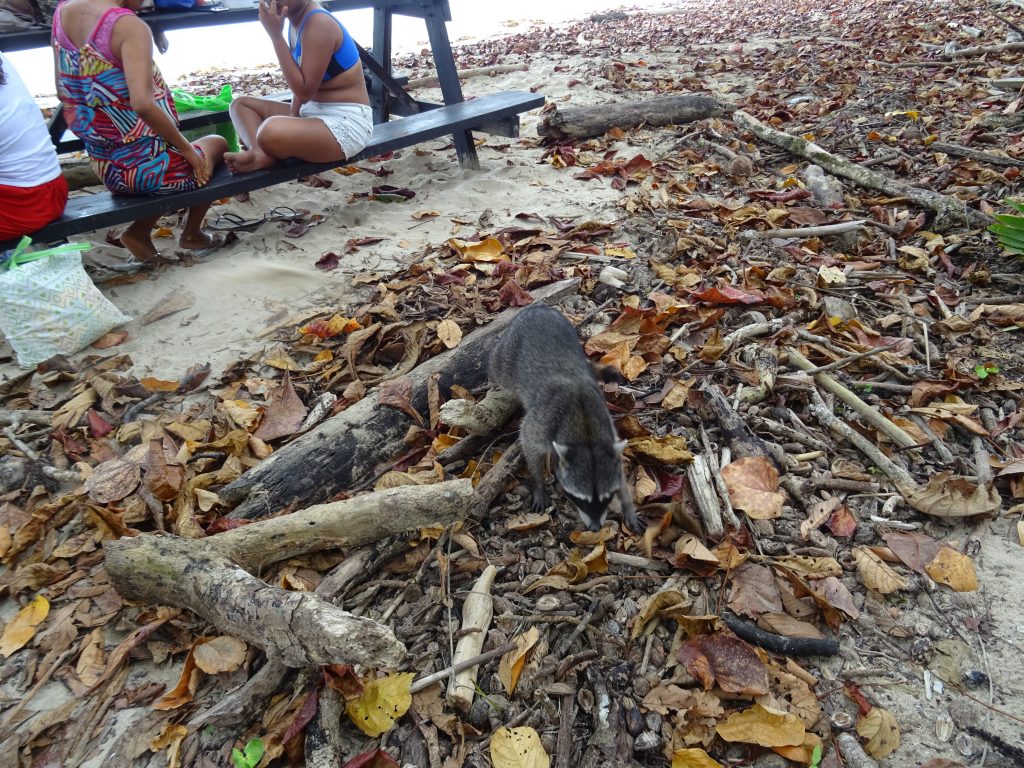
Then we were driven back to Puerto Viejo and we spent the afternoon pottering around. We had lunch in Como mi casa, a vegan restaurant run by an Italian woman from Piemonte. We had quinoa and beetroot burgers in a wrap, with salad, plus some chips from a vegetable similar to sweet potato, with a coconut water drink (Amelia) and a cappuccino (Barry). And to finish a strong espresso for Amelia!
On the way back it started raining, first as a drizzle then heavier and we arrived back really wet, but before that we stopped at the tourist information office and bought a nice wooden toucan for ¢10.
In the evening we ate pizza at Todo es Posible (Everything is Possible), a restaurant run by an Italian couple (they get everywhere these Italians!). They were making cocktails, but I wanted to wait until my birthday to have one as a treat.
Monday 9 March
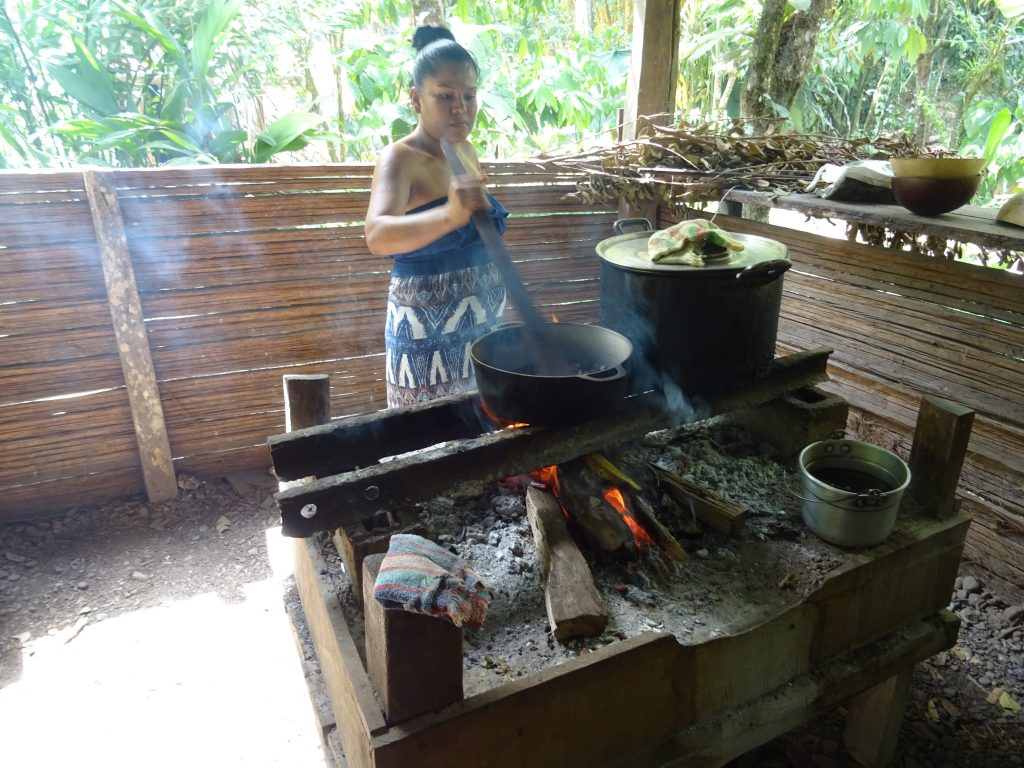
We spent the day with Jacky; we started off with a “chocolate tour” in the Bribri indigenous area in the Talamanca region. We stopped at a house in a beautiful setting – a cacao tree (below), and a display of chocolates with different flavours; also on display were some artisanal objects: earrings and bracelets.
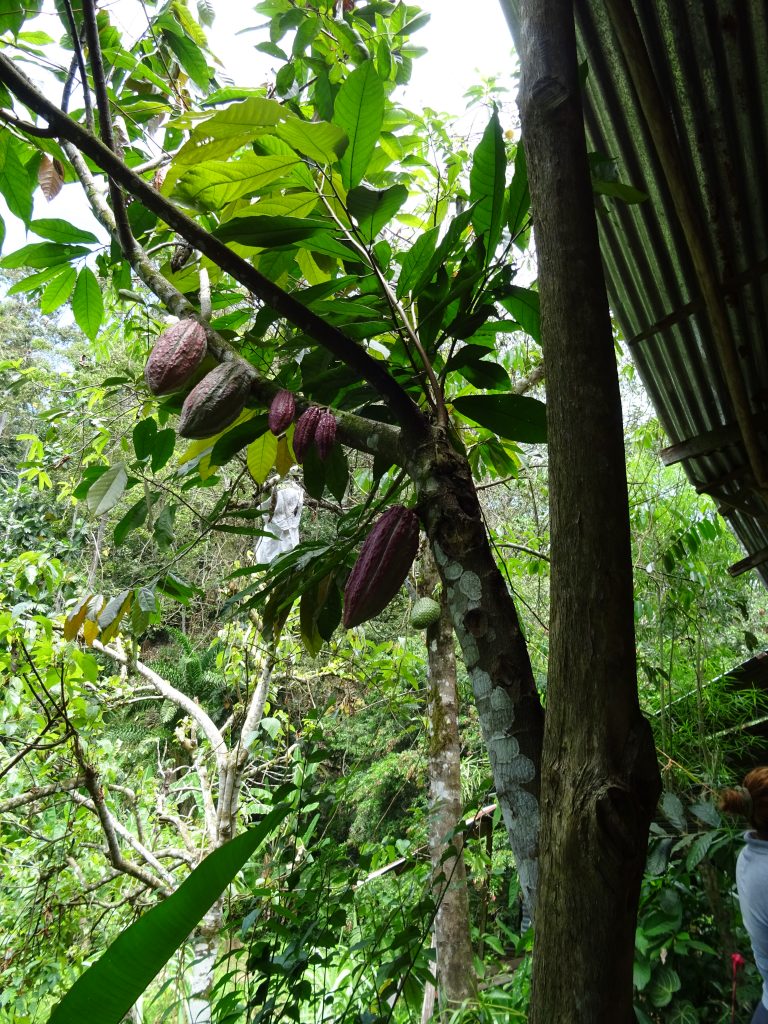
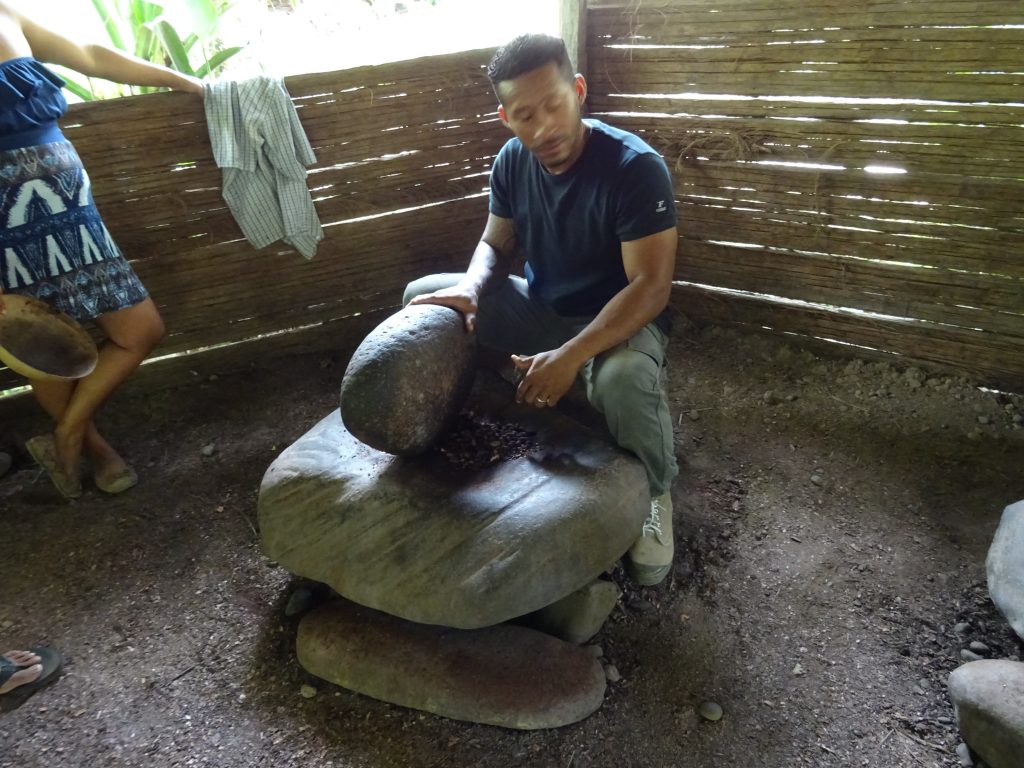
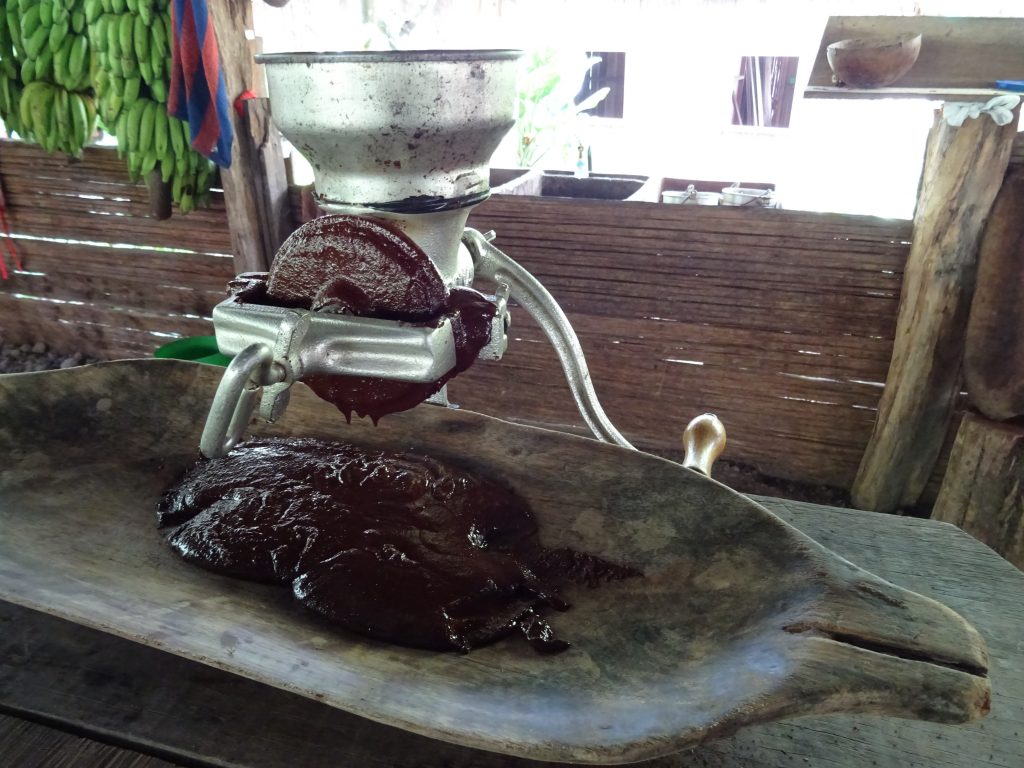
We then moved onto a village where we saw how chocolate paste is made: roasting the seeds, then shaking the bowl to get rid of the husks. The residue is then put through a mincing machine which grinds the chocolate so that it comes out soft and greasy. We ate this with mango and banana – delicious!
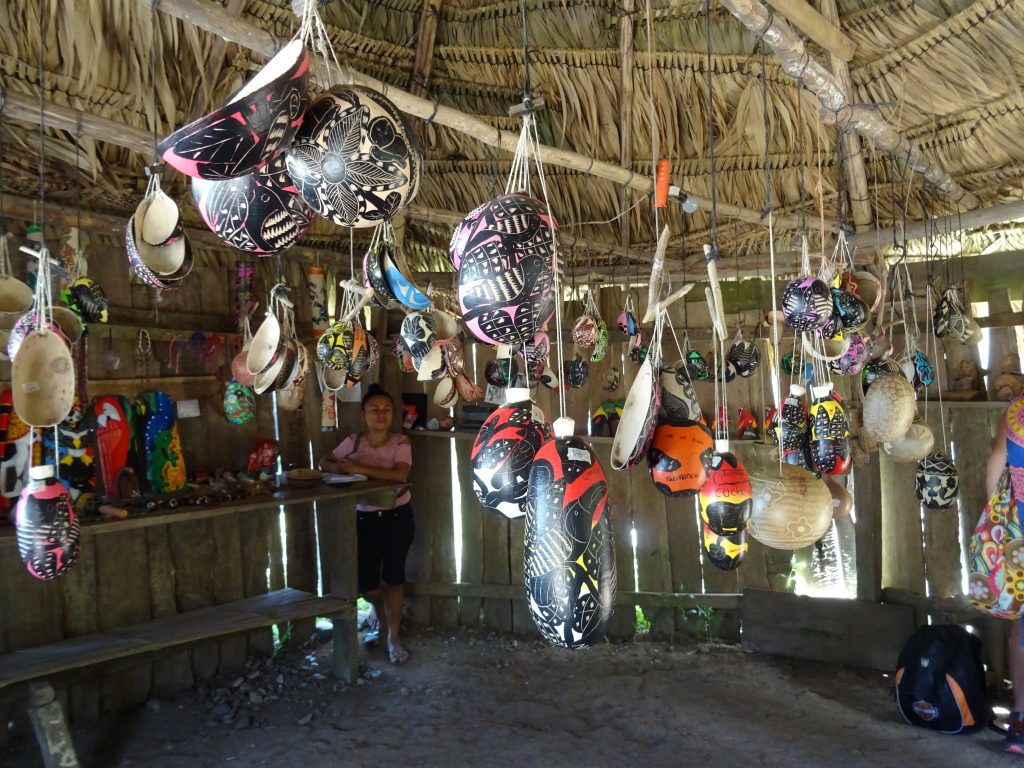
We bought a nice sculpture of the Morpho blue butterfly in balsa wood (that signifies peace, love and good luck).
We had the company of a nice couple (the one from yesterday at Cahuita National Park – Hans Dutch, Susanna German). We met with a shaman, and Jacky also had trained as a shaman and said it took 15 years and all the plants and ailments they cure had to be memorised. At the end of the training the trainee’s knowledge was tested before they were allowed to work as healers. The shaman gave a necklace/amulet to the German woman. Jacky said that the shaman always chose one person from the group that he sensed needed healing. Susanna had told us that she had been treated for cancer, and the shaman must have sensed this as he chose to give her the necklace.
We also went into a netted enclosure with a pond where we saw frogs.
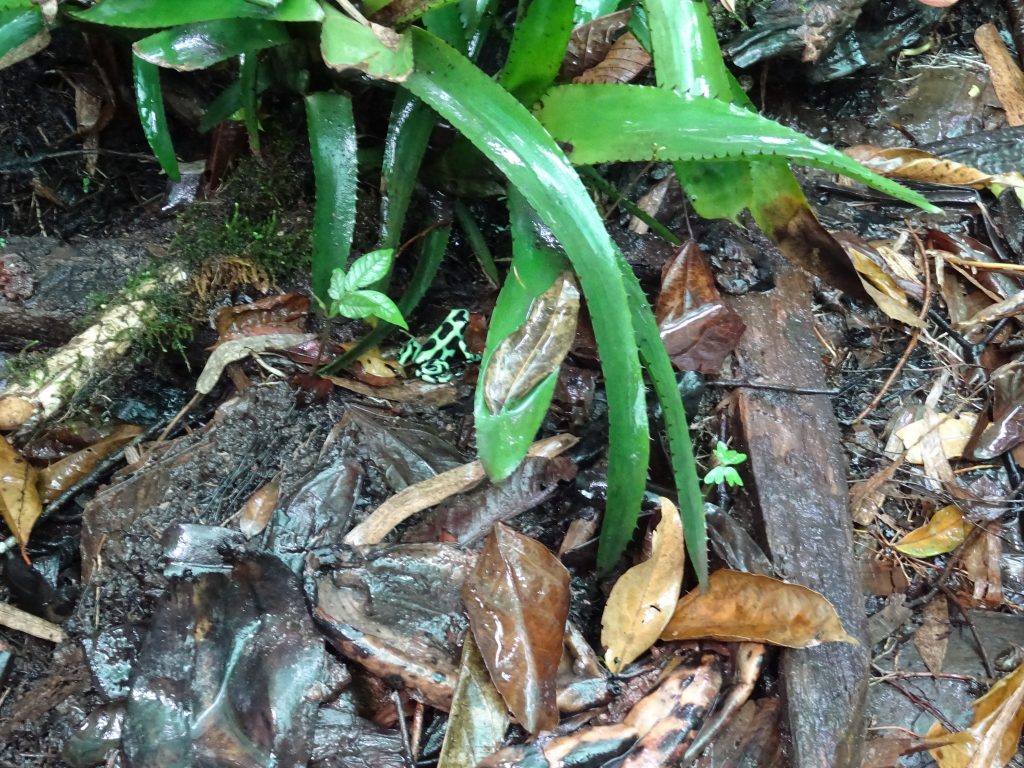
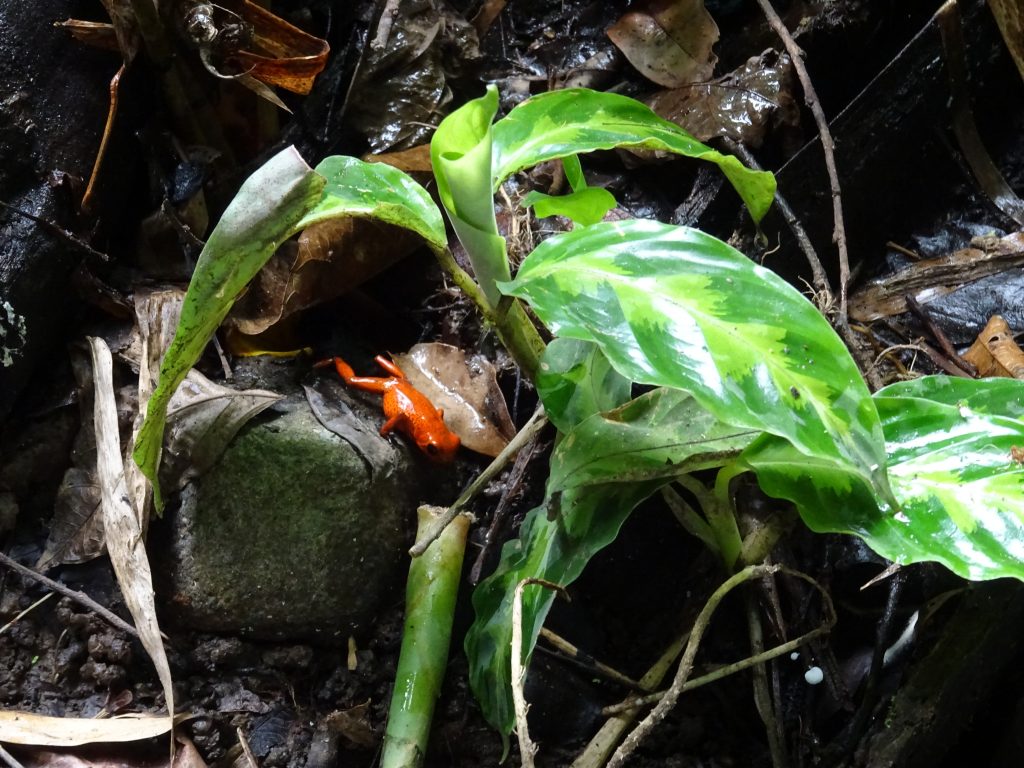
As it was quite hot we enjoyed a splash by a waterfall nearby, very refreshing.
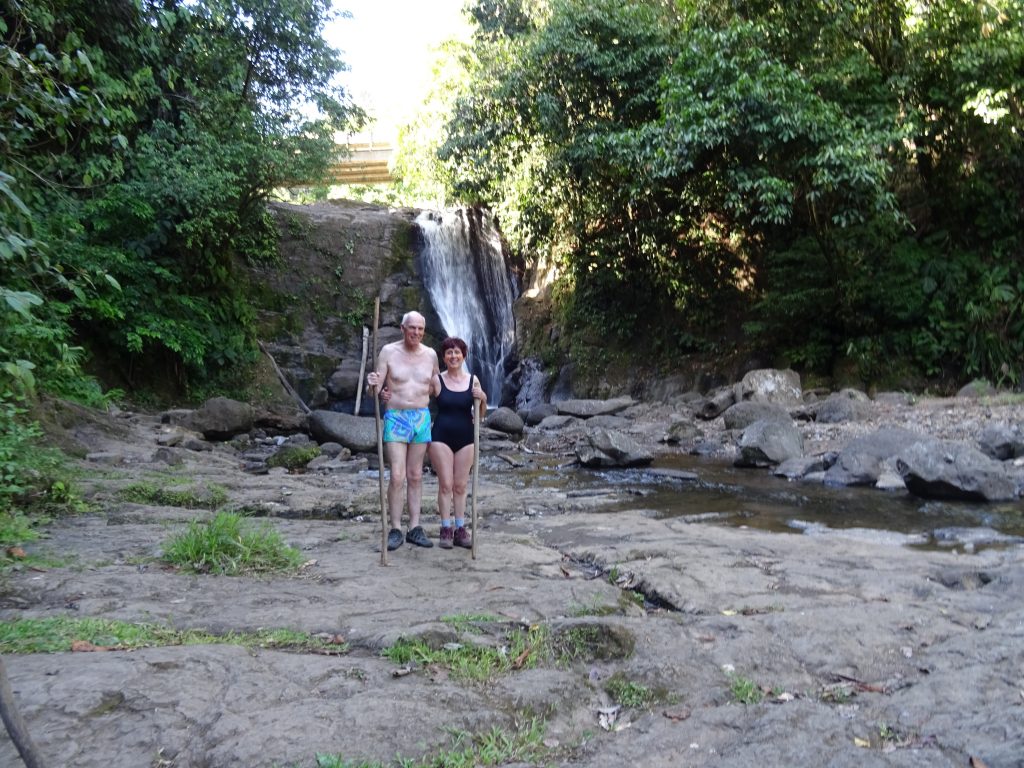
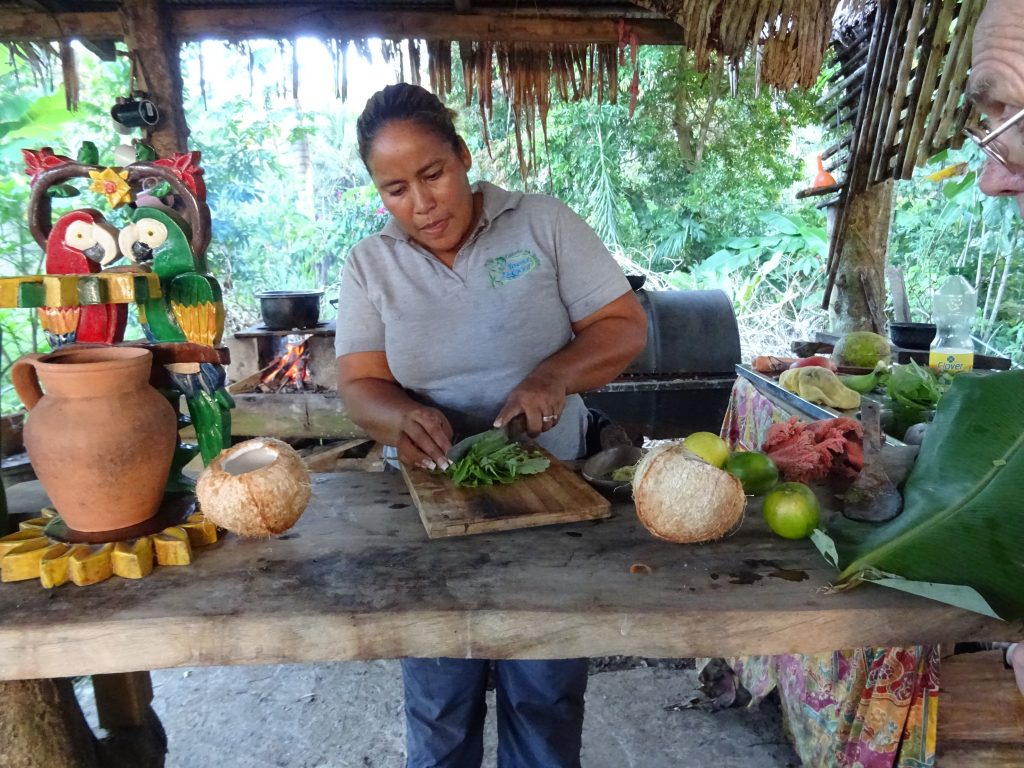
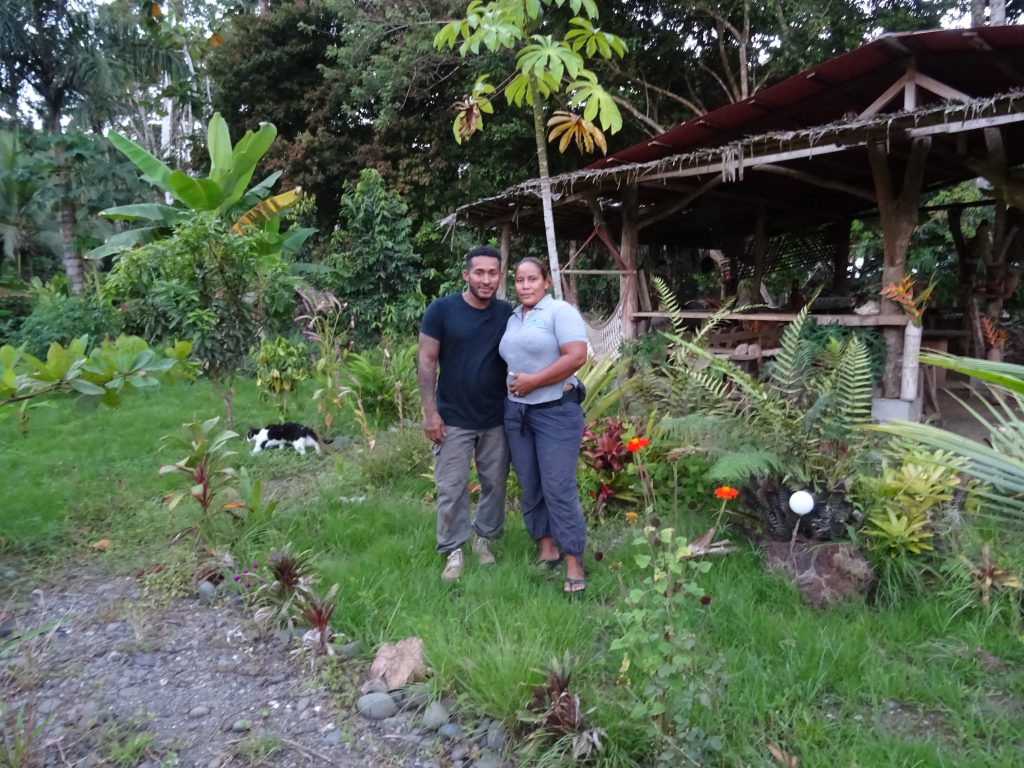
After we got ourselves decent again, we went with Jacky and her husband Giovanni (strange for a Costa Rican to have an Italian name…) to their home for a cookery lesson and dinner. Their garden is full of interesting plants; she picked some herbs to go into our dinner. It was an interesting combination of vegetables and roots: manioc, carrots, bread fruit, niam, tomatoes, fried bananas and avocado. And coconut water to drink, directly from a coconut. A delicious meal. During the preparation we learnt a lot about how indigenous culture and land is under threat and racial discrimination in jobs. Children are obliged to go to school.
Tuesday 10 March
To La Fortuna
After a good breakfast we were picked up at 9.30 and made our way to La Fortuna by shuttle bus. On the journey we had three very chatty companions, especially an Argentinian man who talked non-stop, in Spanish, to a couple from Spain – about ham and football! It was interesting to hear his intonation, unmistakably Argentinian, it sounded very musical (although by the end of the journey I was quite fed up with his chatter…). We changed bus in Guápiles; stopped at a restaurant called Ponderosa, where they had photos of actors from Bonanza. We started singing the tune… quite funny! We shared a mixed salad. Then another two hours to La Fortuna and to Hotel Monte Real, with a view of the Arenal volcano.
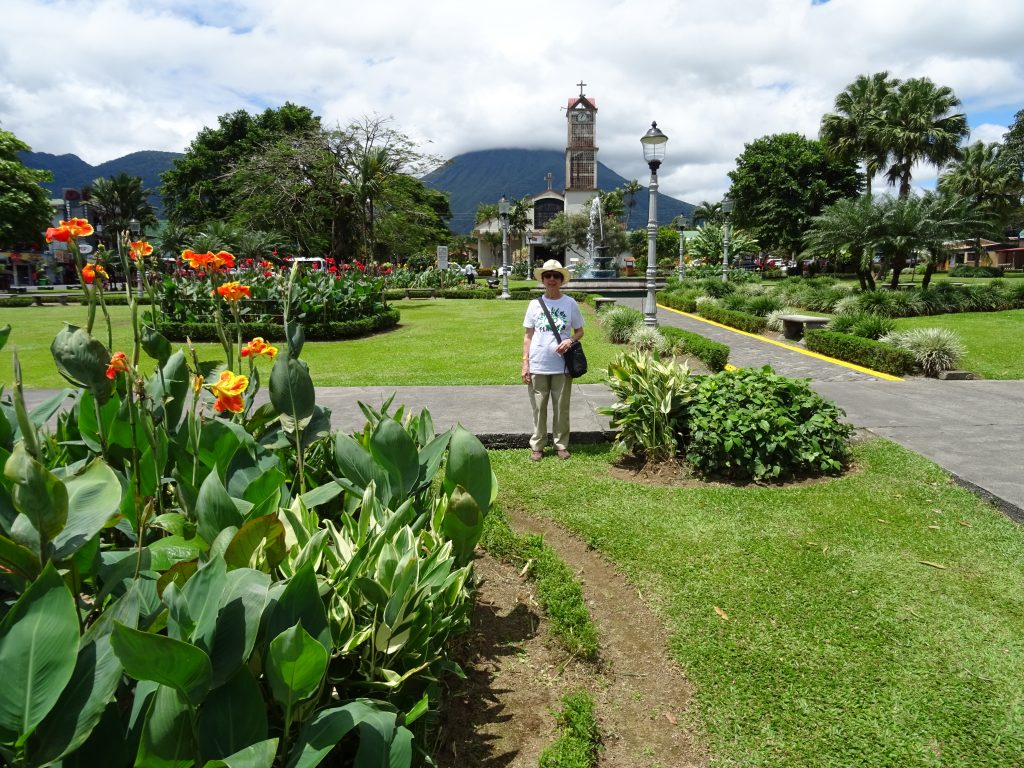
After a refreshing shower we went out for a walk in the town and ate at La Parada (which means stop, in fact it was near the bus stop) – a casado dish, very substantial with rice and black beans, broccoli, cauliflower, green salad, tomatoes, mashed potatoes and avocado, all washed down with Imperial beer. After a postprandial walk around the Parque Central we got back to our hotel.
Wednesday 11 March
La Fortuna, Arenal volcano and Ecotermales hot pools
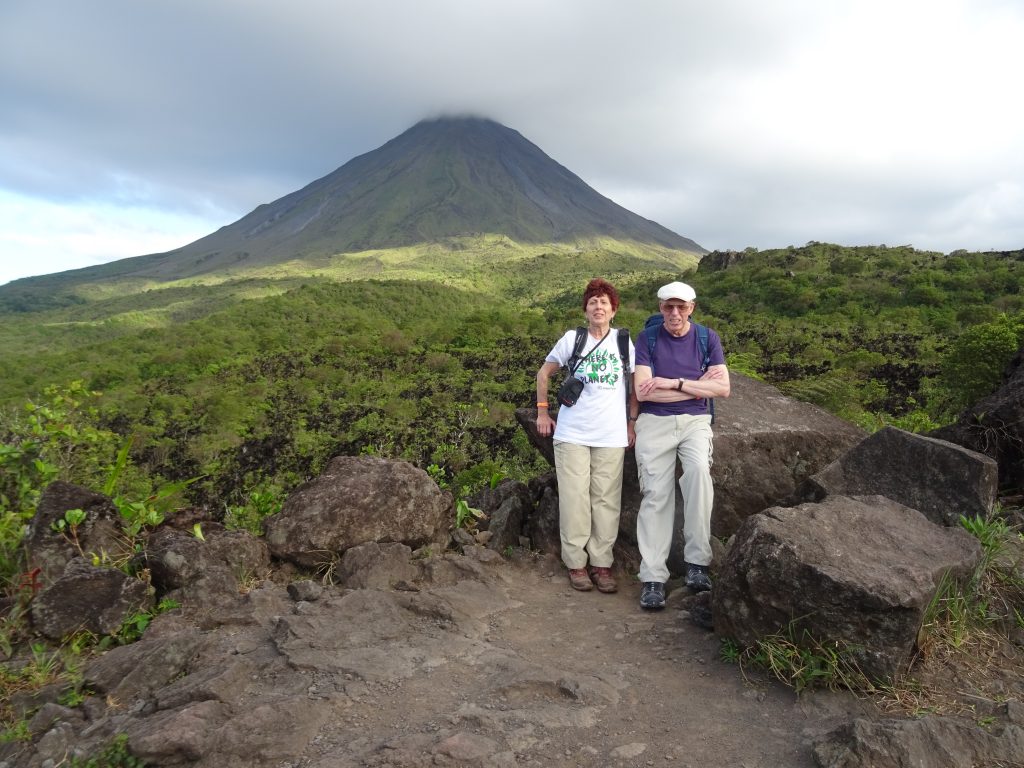
At 2.30pm we were picked up and driven to the start of our hike around the Arenal volcano. Walked up and downhill, took some photos of amazing views of the volcano and the surrounding hills. Yara, our guide, showed us some photos of the volcano as it used to be and how it is now, a photo of the lava flow from the eruption in 1968. In fact our path followed the original road at the base of the volcano.
Through different eruptions another crater developed as lava flows cooled down. At the end of our walk we had some pineapple and watermelon, very refreshing. Our group had four Italians, from Genova and Piemonte, very nice. They had been on the Coco island, which is unhinabited and with only two rangers on it. They got a shock when they came back to San José! We then went to Ecotermales and had a nice soak in the warm waters in the pools. And to finish we had an excellent buffet meal with lots of organic vegetables and a nice peppermint to digest. Then we were picked up at 9pm and taken back to our hotel.
Thursday 12 March
La Fortuna to Monteverde
It’s my birthday!! We were picked up at 8.20am to go to Monteverde. Very interesting journey by bus-boat-bus. Boat across Lake Arenal and then a challenging drive on an unpaved road with quite a few bumps, but our very skilled driver, Laura, managed everything really well.
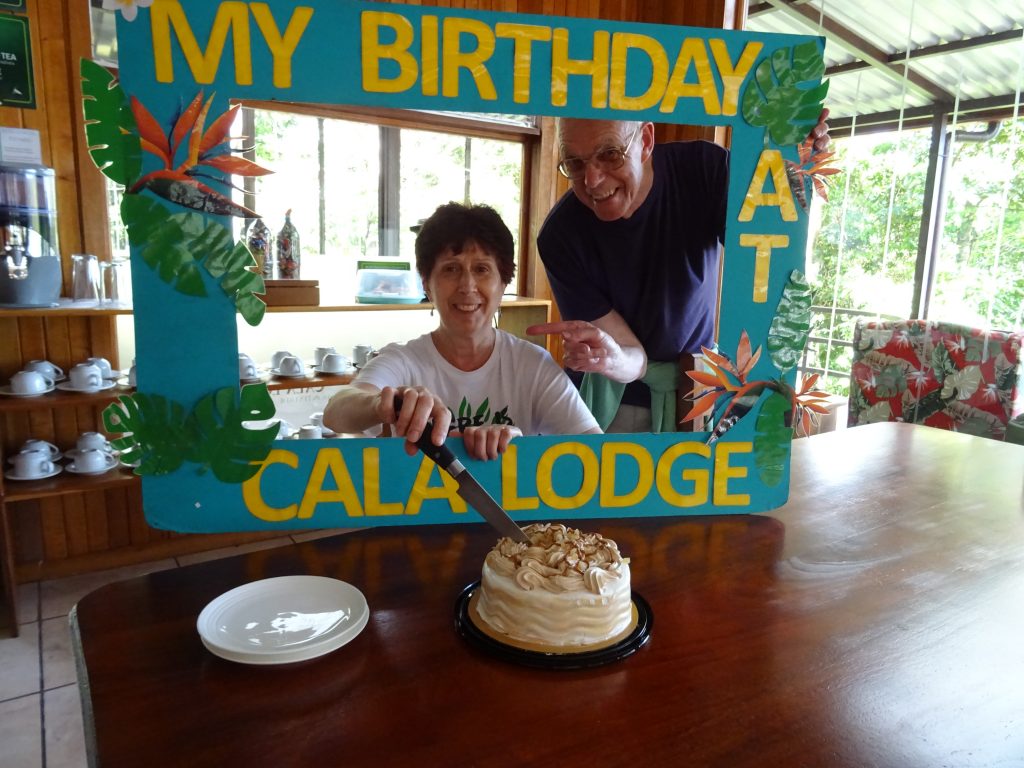
We arrived at Cala Lodge at around 12 noon and I had a very pleasant surprise: a birthday cake in our room, plus a little bar of soap, handmade locally. We settled in and then went to visit a butterfly garden (18,000 colones, dear, but well worth it). The guide, Avril, a Canadian, was very good. She started off by showing us cockroaches and insects, then we went to various netted enclosures where beautiful butterflies were flapping around.
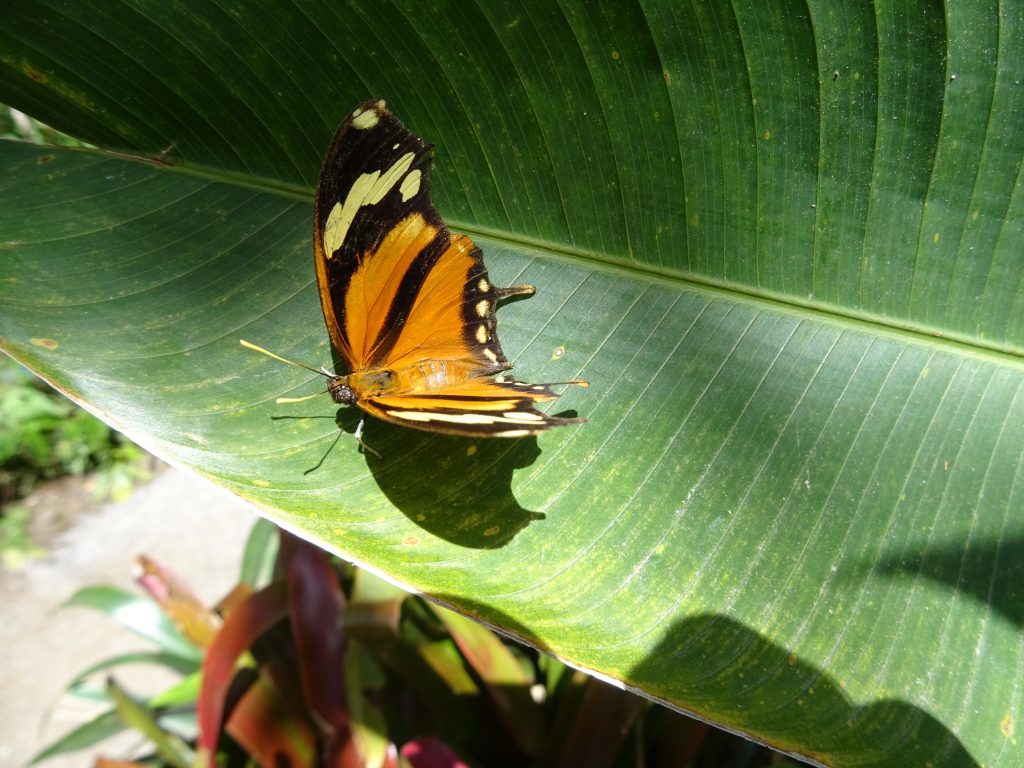
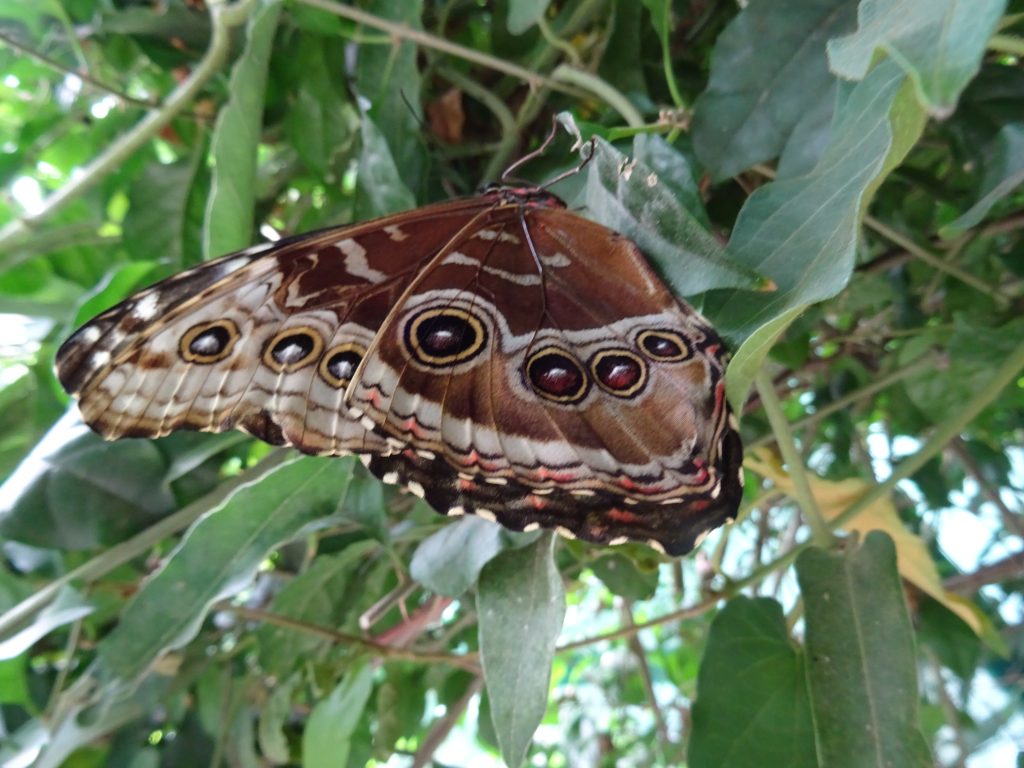
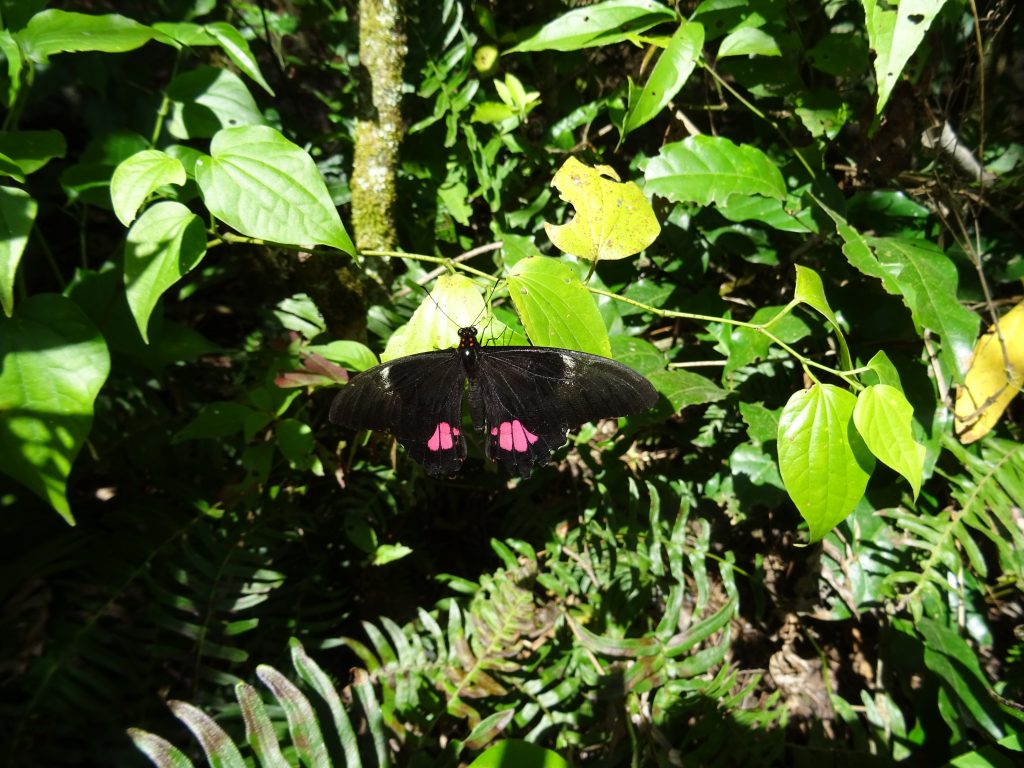
We came back at around 3pm and had coffee and cake and shared it with the staff.
In the evening we went to Morphos Restaurant (like the butterfly) and had one cocktail each and then we had casados with vegetables, mixed salad, avocado and fried plantain, all washed down with a nice Imperial beer. A very good birthday treat.
Friday 13 March
Monteverde
Walked down into town and stopped at a cheap soda for (yes, you’ve guessed!) a casado, but this one had scrambled eggs in it! (so much for being vegan). Then back to Cala Lodge for coffee on the terrace outside the reception where we spotted a hummingbird busy getting nectar from a bush and another beautiful bird on top of a tree stump.
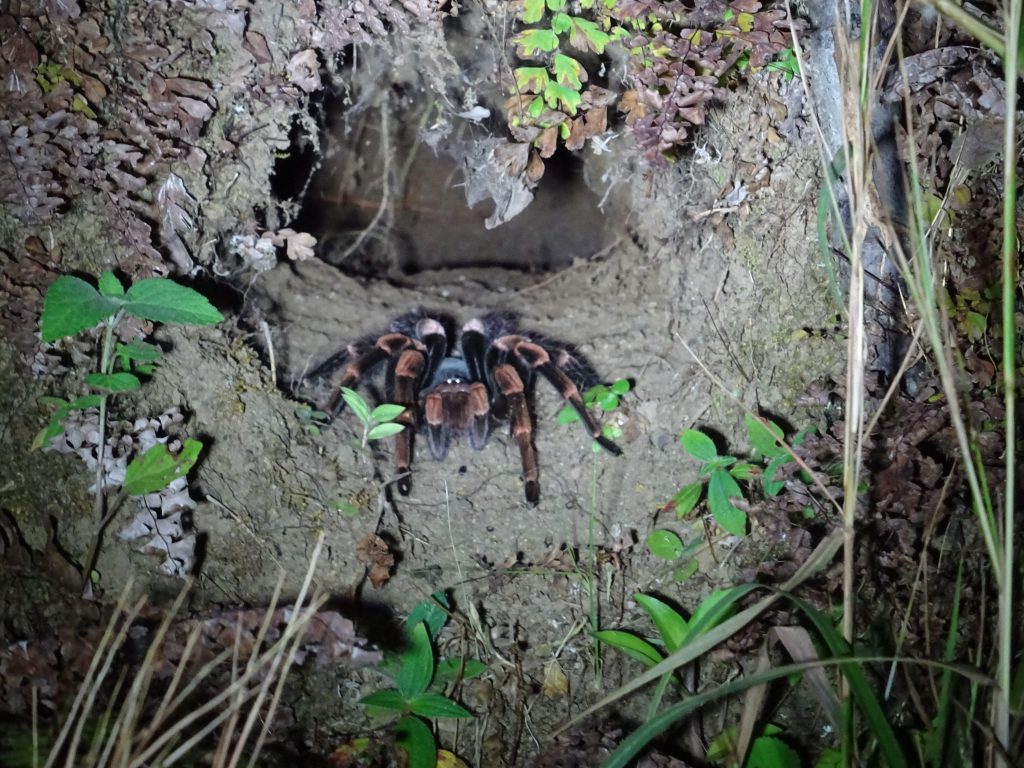
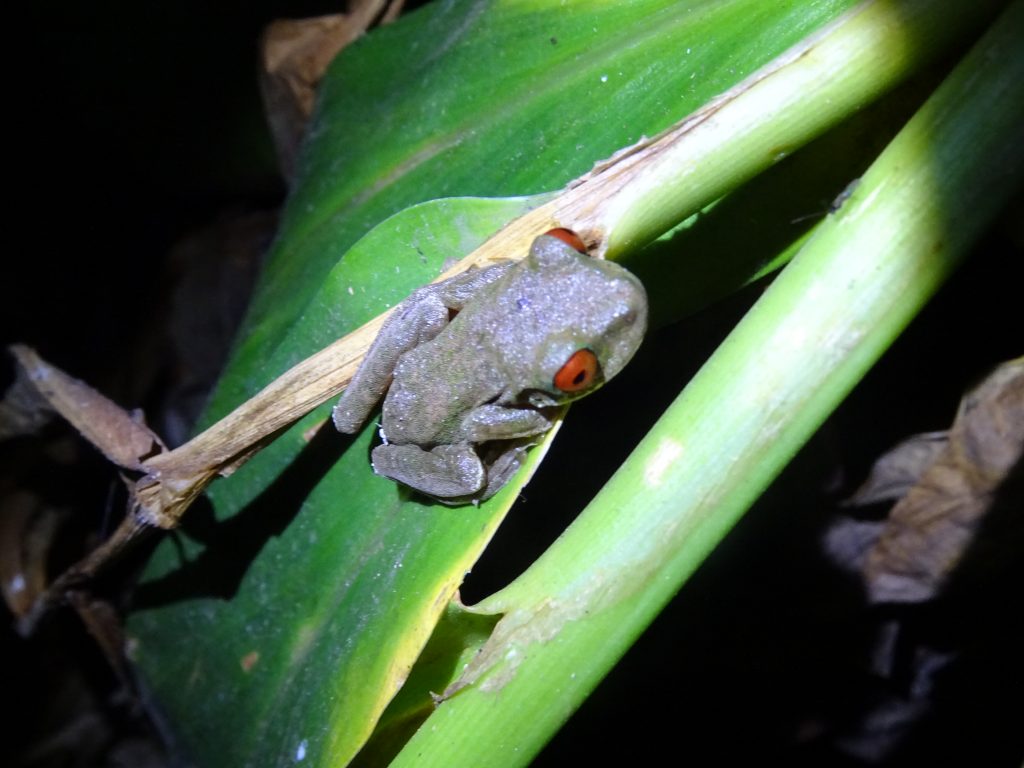
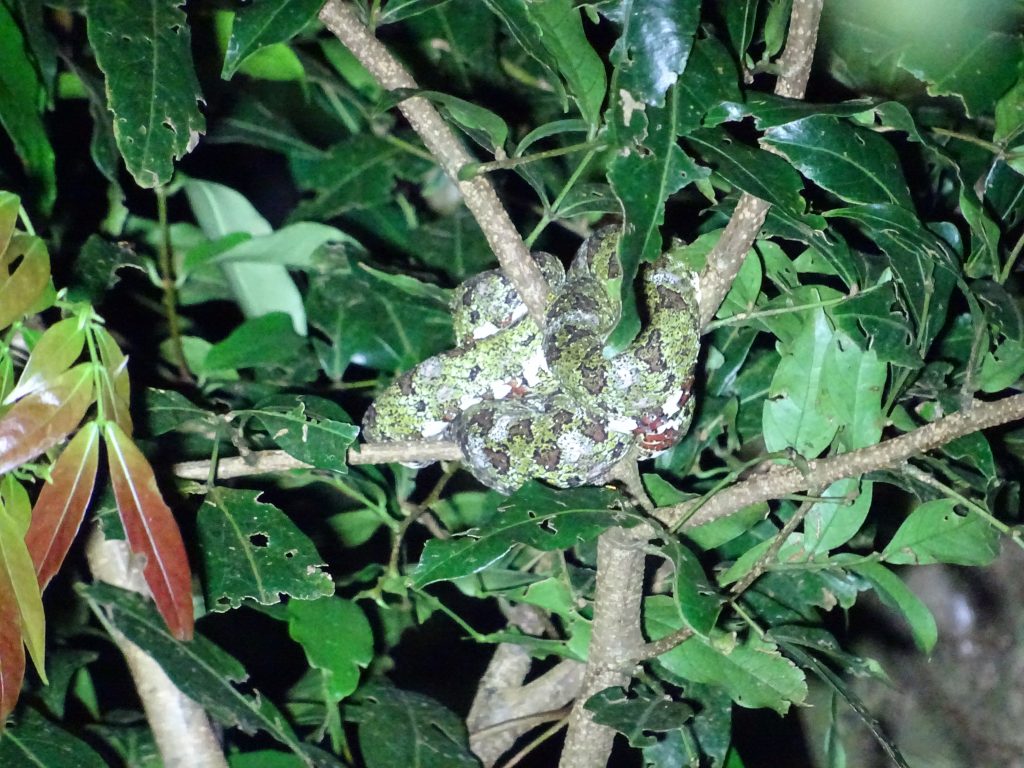
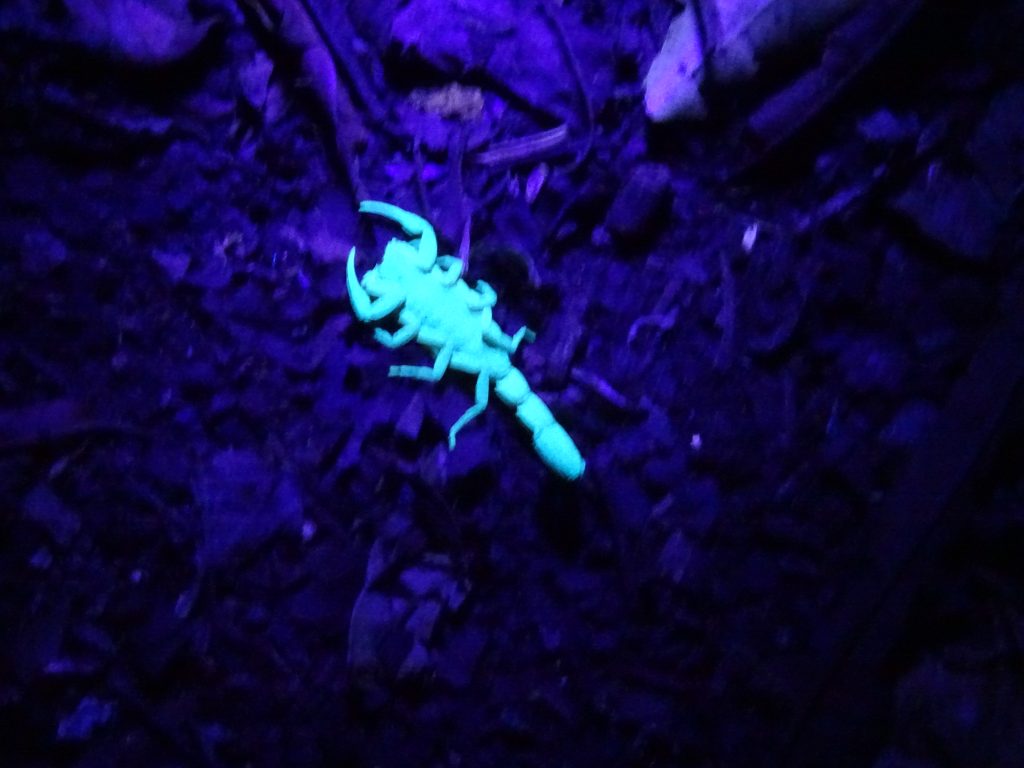
At 5.30pm we went on a night walk to the private reserve Kinkajou, about 10 of us of various nationalities. Our guide Bernie knew exactly where to look for the many creatures hiding in the darkness: we saw a sloth, a tarantula, a jay, a snake, a scorpion, various birds, some asleep with their beak under their wing, a hummingbird in its nest. He guided us to a clearing in the forest where we saw an amazing sky full of stars above us.
Saturday 14 March
Monteverde to Manuel Antonio
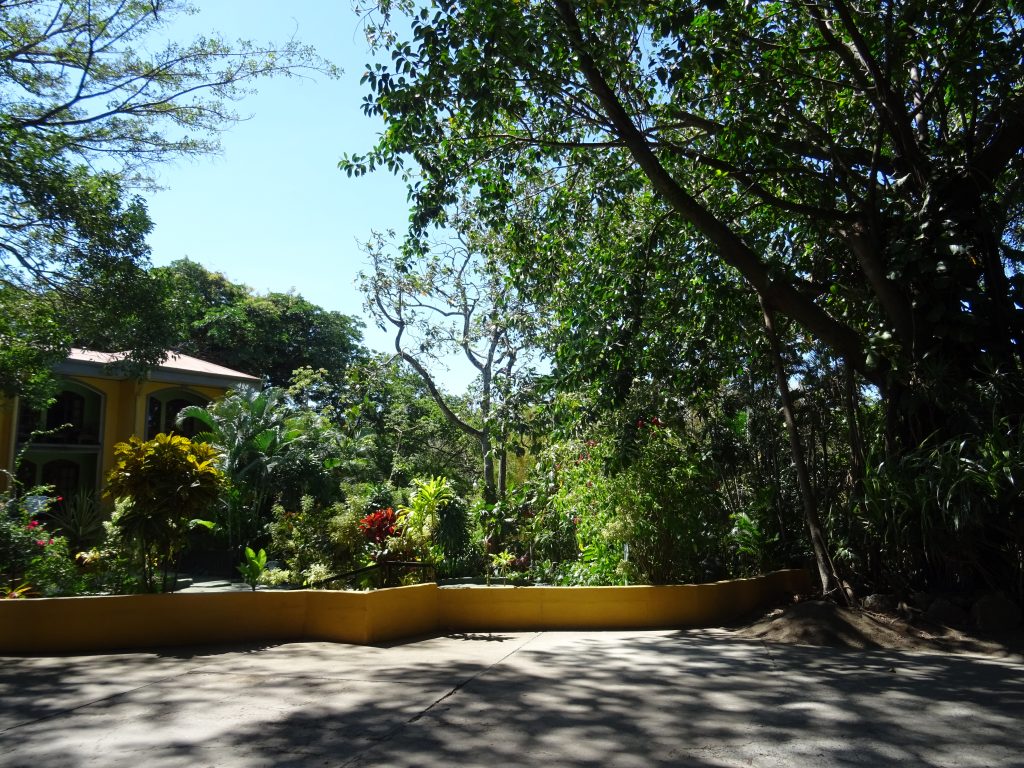
Left Cala Lodge and its wonderful staff for a four hour journey to Manuel Antonio, on the Pacific coast. Stopped at a restaurant-cum-souvenir shop on the way; the temperature here was 35 degrees, a bit of a shock from cool Monteverde! Villas Nicolas, our hotel, is set among trees and our terrace has views of the sea. Quite luxurious.
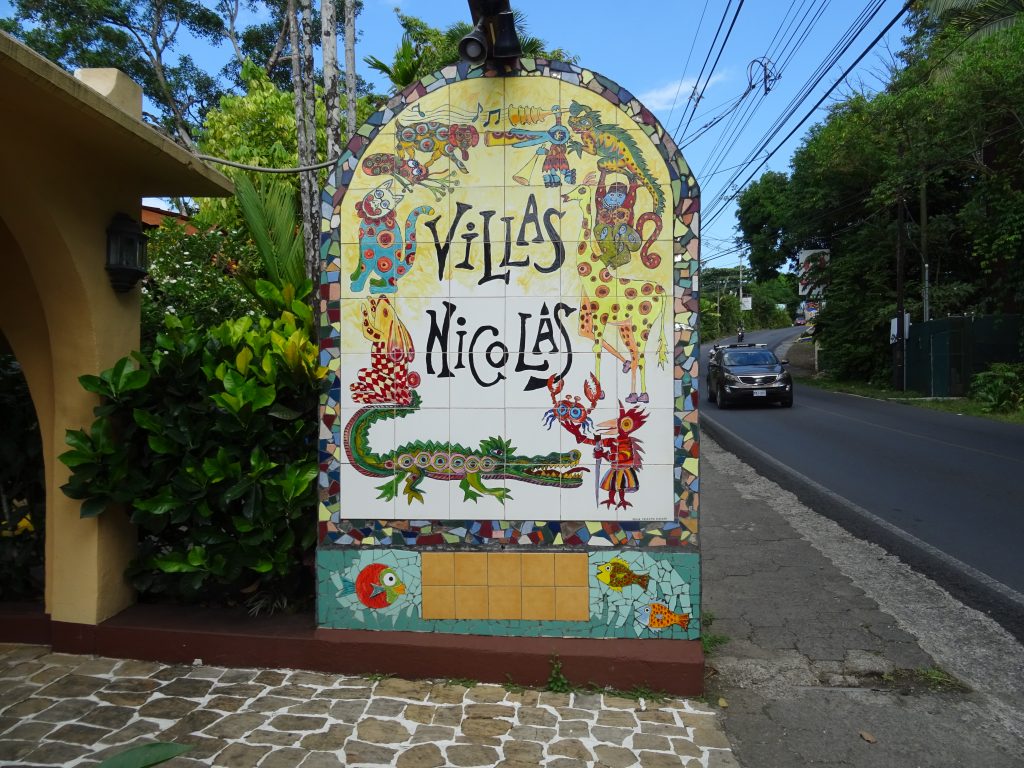
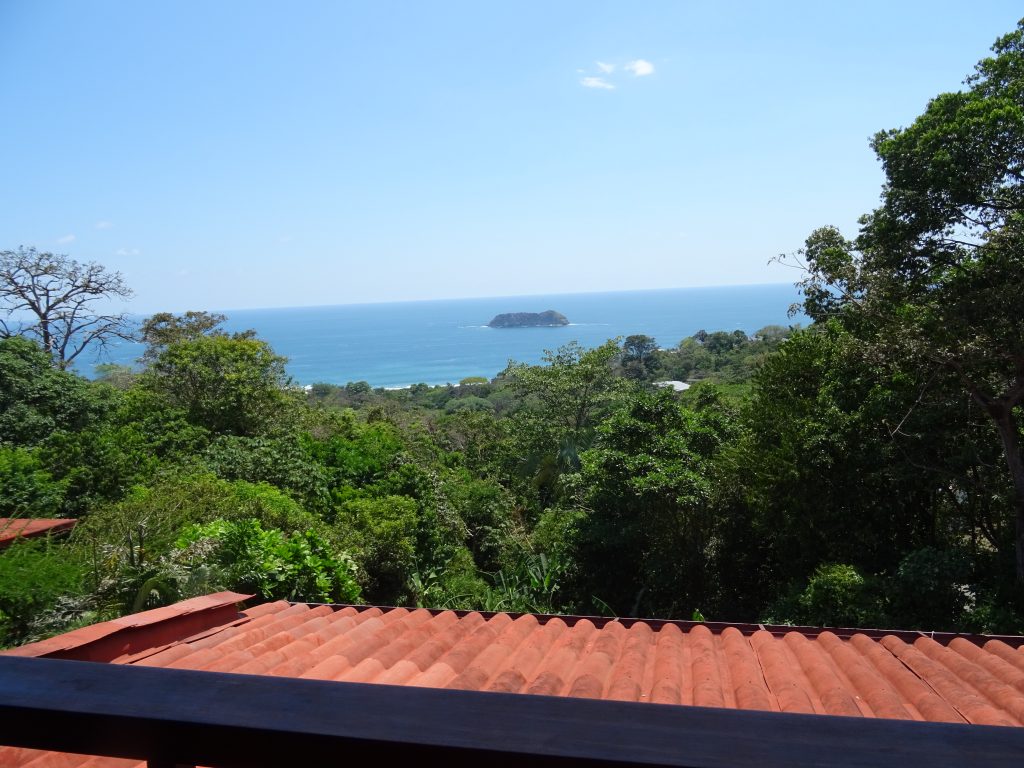
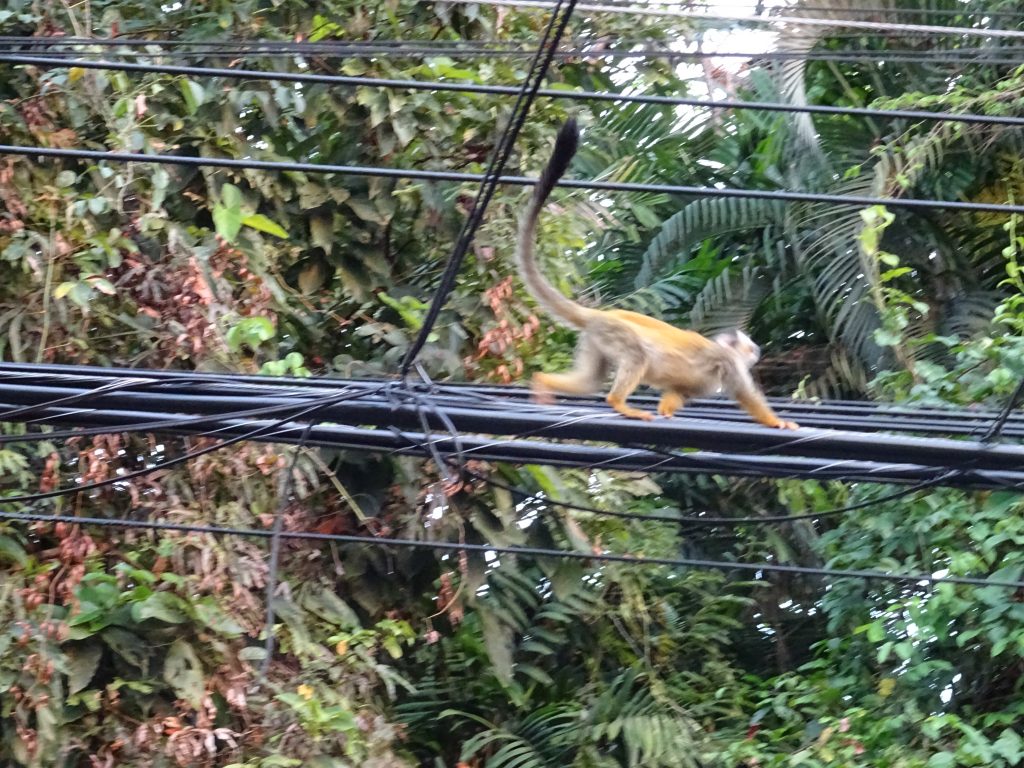
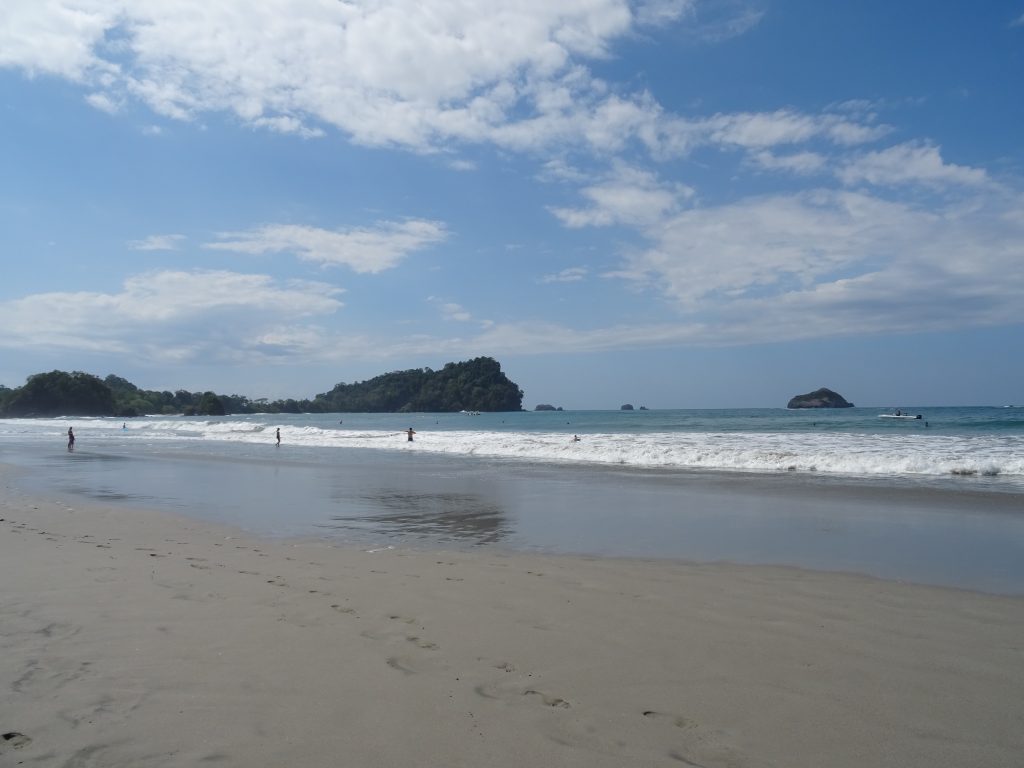
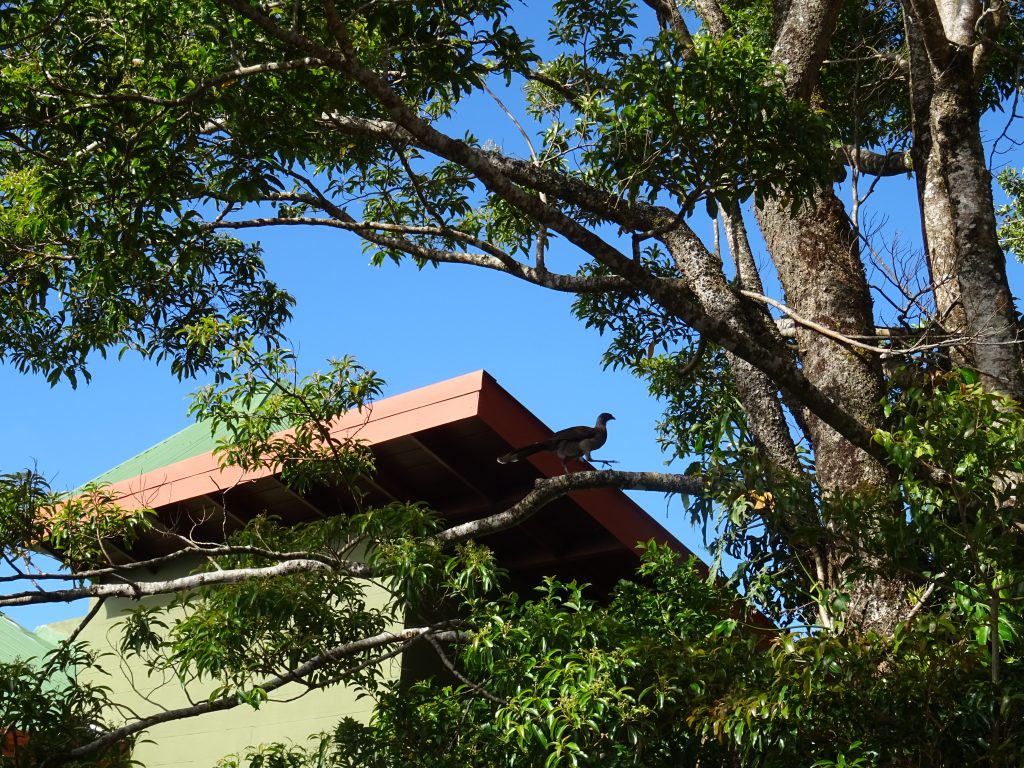
We went for a walk down to the beach and I had a dip in the sea. Quite rough, big waves and cross currents. Lots of surfers. Saw monkeys jumping off trees and walking across the road on power lines.
We had coffee and a vegan chocolate and avocado mousse in Café Milagro. Delicious! In the evening dinner at Café Angel – cheap and cheerful. And, yes, we had casado again.
Sunday 15 March
Manuel Antonio and Kids Fighting for the Rainforest
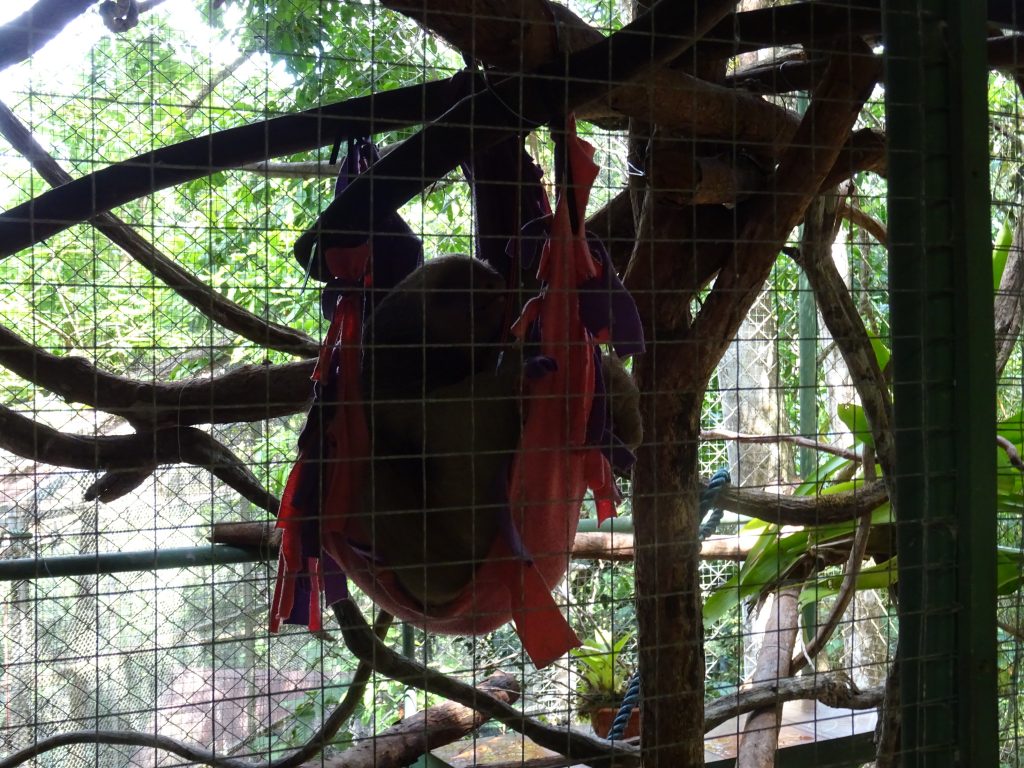
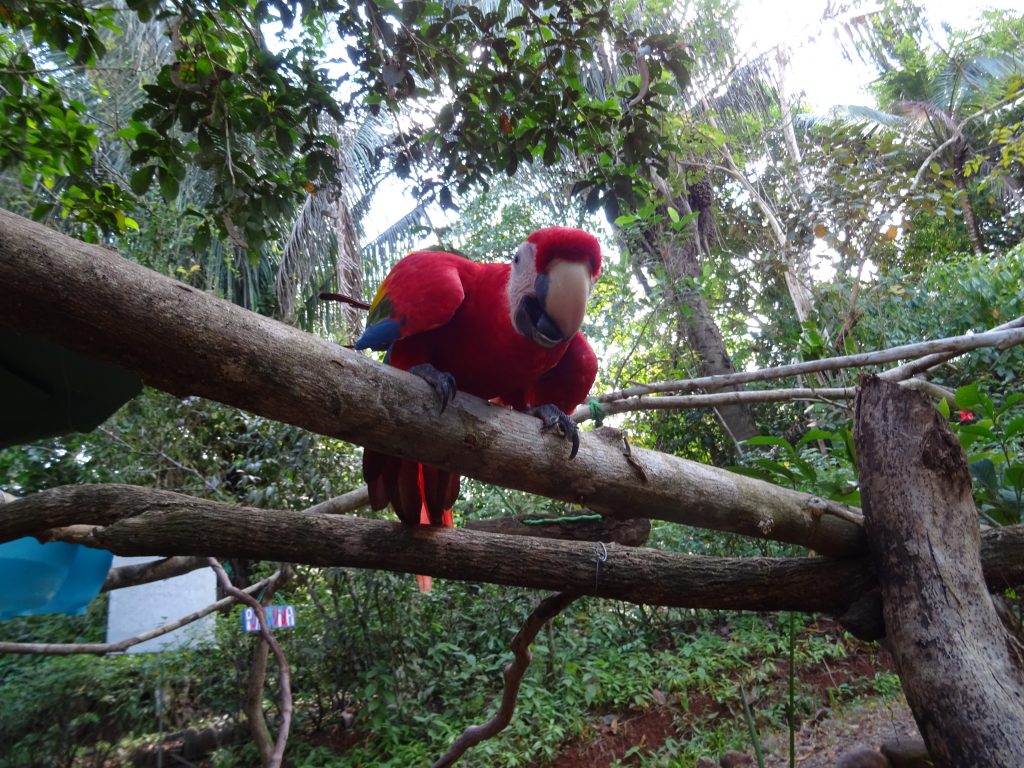
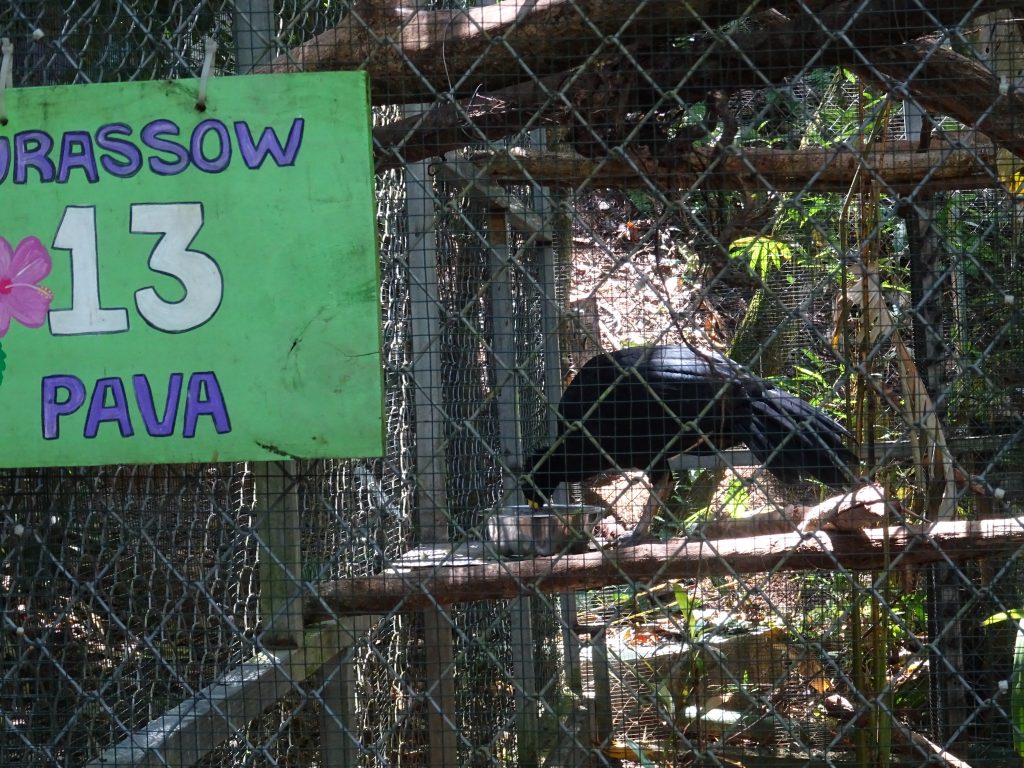
After a typical Costarican breakfast with gallo pinto (painted cockerel) – rice and black beans – fresh fruit, toast and coffee we were picked up by taxi to go to Kids Fighting for he Rainforest rescue centre. We drove through a large plantation of palm oil trees. There we were met by an American man called Chip. The project was started 30 years ago by two nine year old girls who raised money to plant trees by selling painted stones. There is now an area of land where animals are rescued, fed and some of them are released back into the wild. Some of them were kept as pets, so they are no longer used to being with their own kind. Now they live in netted enclosures: marmosets, capuchin monkeys, a beautiful colourful macaw (with a damaged beak) a lizard and many birds. Our young guide, Sierra, was from North Carolina. We both found the whole experience really sad, seeing these poor animals and learning how they were mistreated by humans.
Came back and had lunch at Emilio’s and spoke to a waiter in Italian! We had a falafel wrap each which was very filling. They were roasting coffee by the entrance and the aroma was divine! Then had a walk and after that relaxed on the terrace with a nice book. As El Angel soda was closed, we went back to Emilio’s and had two salads which we shared.
Monday 16 March
Manuel Antonio
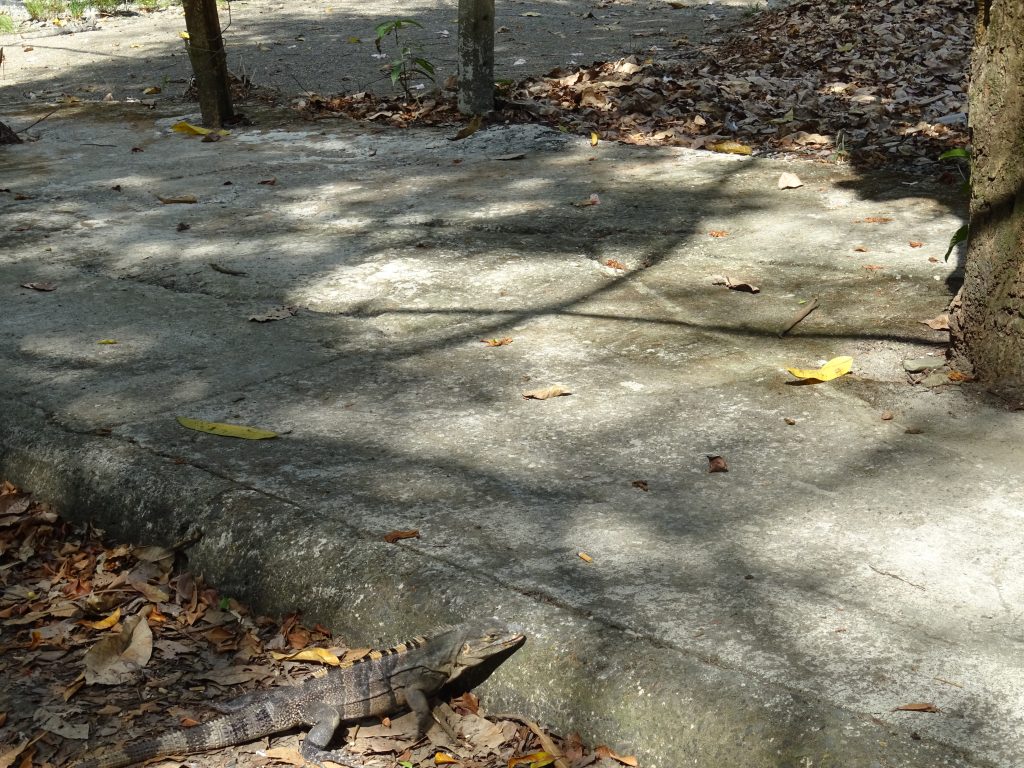
After breakfast we walked down to the beach. It was around 9am and it was already 28 degrees. We saw an iguana on the path.
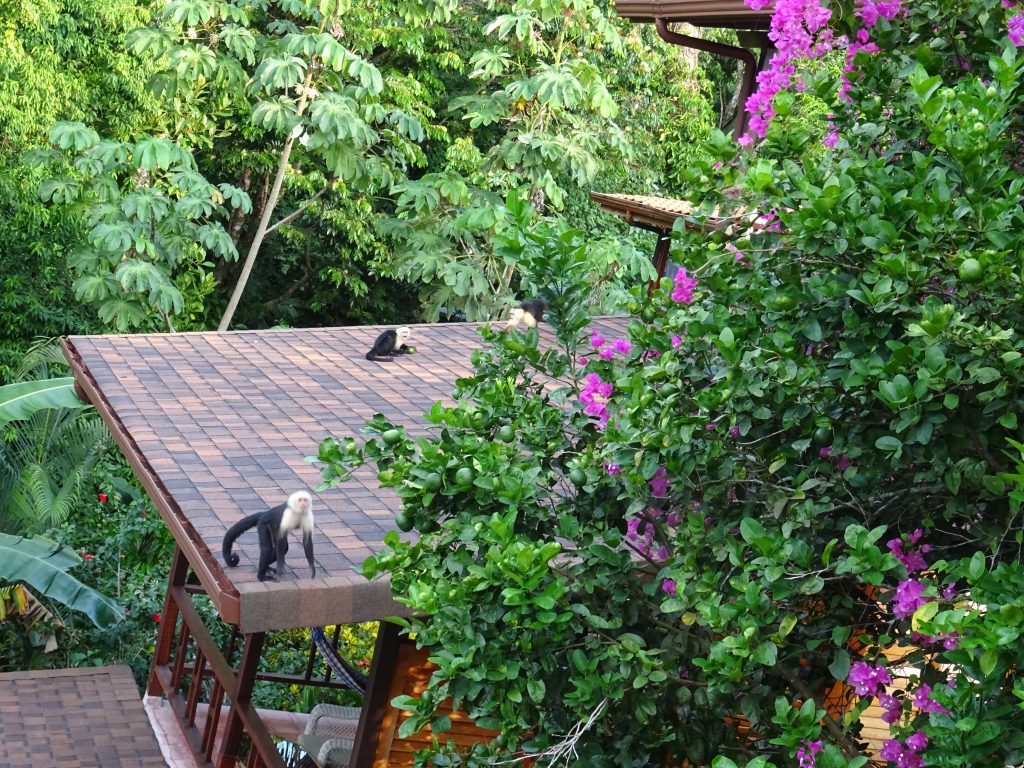
Walked back uphill, hot and sweaty, and had another shower and relaxed on the terrace. A troupe of monkeys paid us a visit, very close.
At 12.20 we were picked up by Interbus to go to Alajuela, near the airport.
Beautiful journey through hills, with a short stop on the way. Met a nice Swedish couple on the shuttle; he is a geologist and bought two books about mammals and amphibians/reptiles of Costa Rica in the souvenir shop. We were dropped off at Denys’s Restaurant in Alajuela and took a taxi to the Trapp Family Inn, which cost us 13,000 colones (£20!). The taxi driver told us that Alajuela is three times bigger than San José.
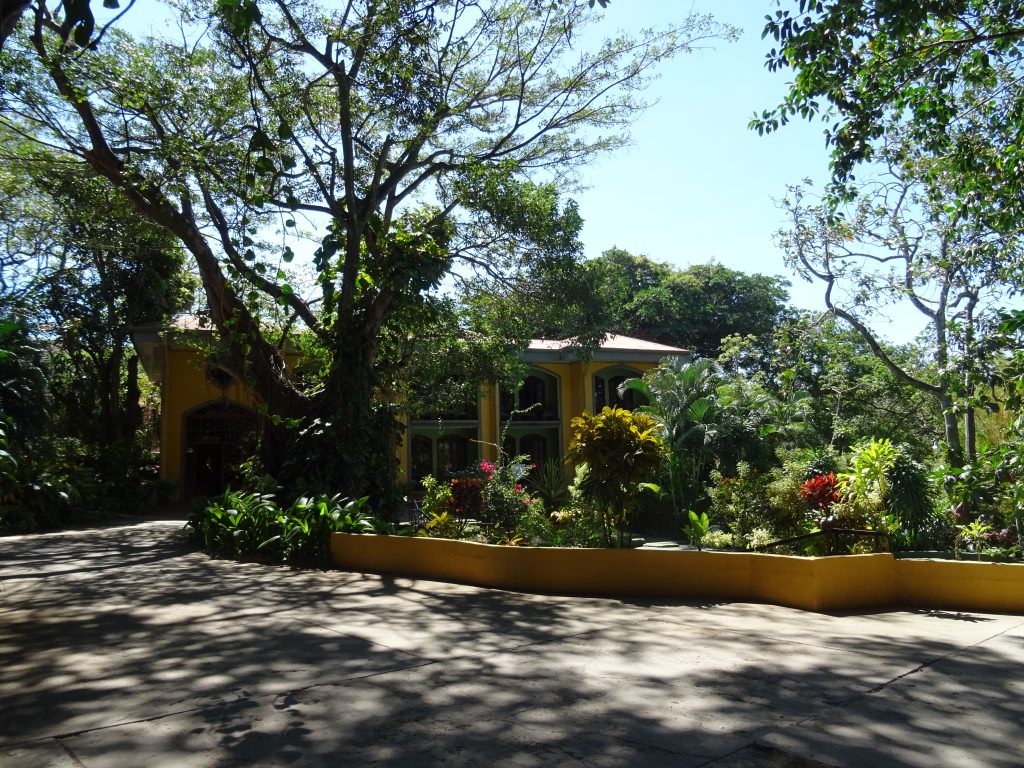
Our hotel is in a beautiful setting, trees, birds and a pool. We had dinner at 6.30pm and had our last casado and chips with guacamole – yummy! Our room is spacious, with a terrace. We can hear planes landing.
Tuesday 17 March
Alajuela, Trapp Family Hotel and to the airport
We were picked up at 3.30pm for a short drive to the airport for our flight back to Gatwick. Very crowded, people wearing masks and getting edgy about flying home to an uncertain situation due the coronavirus. Our flight was four hours late but we were lucky to get back, as Costa Rica was introducing measures to close things down the next day and flights were going to be cancelled.
We took back good memories of this wonderful country and its people. ¡Pura Vida!
Literally: Pure Life! this is a much used interjection with people as you meet them; if they ask you “how are you? you reply “Bien, pura vida!”
When we arrived back at Gatwick it was a bit of a science fiction scenario as the airport was almost deserted as was the train home. The coronavirus had changed everyone’s lifestyle.
And finally, if you want to hear the sounds and see the animals in the rainforest click on the link below for a wonderful experience:
There is also a Guardian article about bringing nature into the capital (30 April 2020)- here is the link:
https://www.theguardian.com/environment/2020/apr/29/sweet-city-the-costa-rica-suburb-that-gave-citizenship-to-bees-plants-and-trees-aoe
I hope you like it!